A sharp decline in the oil sector, falling foreign exchange revenues and intensifying trade restrictions have exposed Iran’s economy to the risk of a deeper recession and reduced industrial production capacity.
According to Steel World Review, the latest estimate by the Monetary and Banking Research Institute on Iran’s economic performance indicates that the country has recorded negative economic growth of 5.2%. This figure points to an economic contraction and mounting pressure on the country’s production sectors.
One of the most significant findings of the report is the sharp decline in the oil sector. For decades, this industry played a decisive role in compensating for weaknesses in other sectors of the economy and providing the country with foreign exchange revenues. It has now become one of the main contributors to Iran’s declining economic growth.
$435 Million in Daily Disruptions to Iran’s Trade
At the same time, Miad Maleki, a former official at the US Department of the Treasury, has estimated the value of trade disruptions resulting from the maritime blockade of Iran at approximately $435 million per day.
According to this estimate, around $276 million in exports and $159 million in imports are affected by trade restrictions each day. If these conditions persist, the value of trade affected by these restrictions would reach approximately $13 billion over each 30-day period.
Declining exports and restricted foreign exchange inflows, combined with disruptions to imports of raw materials, equipment and intermediate goods, could increase inflationary pressures and production costs.
The Steel Industry at the Intersection of the Energy Crisis and Trade Restrictions
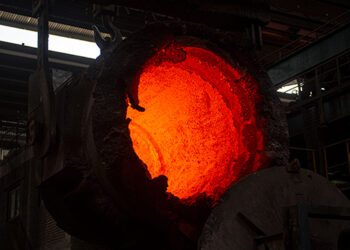
Iran’s steel industry, which has faced extensive restrictions on electricity and gas supplies in recent years, is now exposed to a combination of simultaneous economic and trade challenges.
Rising transportation costs, restricted access to export markets, difficulties in procuring industrial equipment and spare parts, higher working capital costs and exchange rate fluctuations are among the factors that could reduce steel producers’ profit margins.
If these conditions persist, they could lead not only to lower production and export capacity, but also to delays in development projects, reduced industrial investment and a weakened competitive position for Iranian steel in global markets.
What distinguishes the current situation from many previous periods of recession is the simultaneous weakening of both the oil sector and non-oil industries. Declining oil revenue capacity, alongside the energy crisis and trade restrictions, increases the risk of stagflation, reduced industrial employment and the erosion of the country’s productive capital.