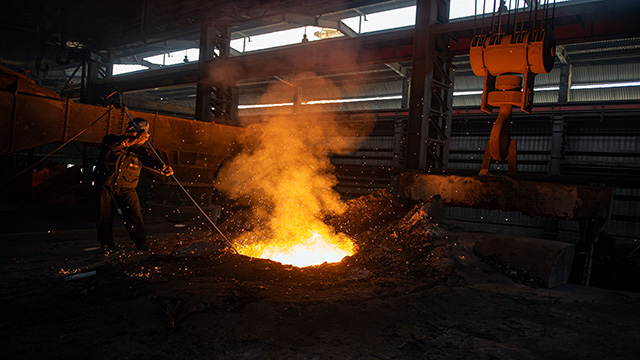
The echoes of the recent conflict had not yet fully subsided when the rhythmic hum of electric arc furnaces heralded the dawn of a new era on the Iranian plateau. To the global steel community, Iran has always been a symbol of resilience; however, the post-war landscape of 2026 reveals a “reconstruction paradox”—a situation where severe infrastructure damage collides with an unprecedented domestic hunger for long products and structural steel.
Wounds of War: Assessing the Infrastructural Gap
The primary challenge currently facing the Iranian steel industry is not a scarcity of raw materials, but rather the fragility of the “Energy-Steel” nexus. Strategic strikes during the conflict targeted key nodes of the power grid and gas compression stations, which serve as the vital arteries for Iran’s Direct Reduced Iron (DRI) units.
Current estimates suggest that while the core structures of giants such as Mobarakeh Steel and Khouzestan Steel (KSC) remain largely intact, their operational capacity is restricted to 60% due to persistent power grid instability. The restoration of the national electricity network has now become the sole determining factor for price fluctuations in the global sponge iron market; Iran’s reduced output has forced regional buyers to seek more expensive alternatives from India and the Persian Gulf states.
Domestic Boom: A Thirst for Long Products
War is inherently a destroyer of cities, and its end serves as the greatest catalyst for construction. Iran’s Ministry of Roads and Urban Development has announced the commencement of a massive, multi-year reconstruction phase. This has shifted the industry’s domestic focus:
-
Rebar and I-beams: Domestic demand for long products has increased by 40% annually.
-
Price Floors: As noted in recent market reports, products such as Esfahan Steel Company (ESCO) rebar have established new price floors. This trend is driven not only by currency fluctuations but also by a genuine shortage of the construction materials required for the reconstruction of damaged sectors.
Currency Shifts and the “Havala” Rate Surge
The financial architecture of trade has also undergone a fundamental transformation. With the unification of the NIMA and SANA rates into a single “Havala” rate—currently fluctuating around 144,000 IRR/USD—the cost of imported consumables such as graphite electrodes, refractories, and specialized spare parts has skyrocketed. For Iranian steelmakers, the challenge is no longer just steel production, but maintaining the liquidity necessary to sustain technology within a fractured global supply chain.
Strategic Pivot to the East
The geopolitical realignment following the ceasefire has solidified the “Look East” policy. As stringent barriers from Western sanctions persist, Chinese technology and Russian scrap are filling the existing void. We are witnessing a mushrooming of “Modular Mini-Mills”—smaller, more agile plants that can be powered by local renewable energy networks, reducing dependency on damaged national infrastructure.
The Resilient Titan
The Iranian steel industry currently resembles a compressed spring. The country possesses the world’s second-largest gas reserves and massive iron ore deposits in Chadormalu and Gol-Gohar. The historical “war-steel” cycle has transformed this industry into one of the most cost-efficient in the world.
As we move through 2026, the question is no longer whether Iran can produce steel, but how fast it can repair the bridges and power lines that connect its furnaces to the world. To the global observer, one thing is clear: the road to stability in the Middle Eastern steel market runs directly through the reconstruction of Isfahan, Ahvaz, and Bandar Abbas.
Editor’s Note: This report was prepared using real-time data from the Isfahan and Tehran Metal Exchanges and reflects the current geopolitical stability as of May 5, 2026.