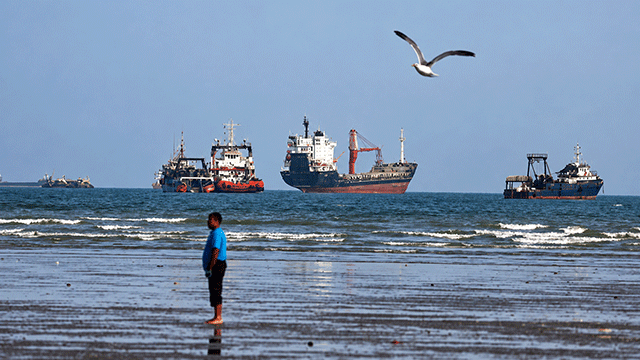
Subheadline: Preliminary Kpler data points to a significant decline in commodity vessel traffic through one of the world’s most important energy corridors.
Steel World Review: Commodity vessel traffic through the Strait of Hormuz fell to just two vessels on Monday, down from 10 vessels on Sunday, according to preliminary data released by Kpler on Tuesday.
The preliminary Kpler data showed that a Panama-flagged Supramax vessel carrying a mineral cargo and a Liberia-flagged bulk carrier entered the Strait of Hormuz. However, the routes used by the two vessels to enter the waterway were not known.
The figures do not include vessels that may have switched off their Automatic Identification System (AIS) transponders to avoid detection.
Before the conflict between Iran and the parties involved began on February 28, the Strait of Hormuz typically handled around 125 large commercial vessels per day, including tankers, gas carriers, bulk carriers and container ships. The waterway also accounted for the transportation of around 20% of the world’s daily crude oil and liquefied natural gas supply.
Meanwhile, Marisks Intelligence, a shipping intelligence and tracking company, said on Tuesday that a crude oil tanker and a liquefied petroleum gas (LPG) carrier were attacked in two separate incidents while crossing the Strait of Hormuz.
According to the company’s report, the LR Stephanie,
an Isle of Man-flagged crude oil tanker, was struck by an unidentified projectile while entering the waterway on Monday, leaving two crew members with minor injuries. LSEG data showed that the tanker is managed by Universal Tanker Corp.
The company had not responded to a Reuters email request for comment by the time
the report was published.
In a separate incident, the Liberia-flagged LPG tanker Al Maryah was struck on Sunday while departing the Strait of Hormuz. The vessel is managed by Abu Dhabi National Oil Company.
The sharp decline in commercial vessel traffic, alongside reports of attacks on tankers, points to significant disruption to maritime traffic through the Strait of Hormuz, a waterway that plays an important role in the global movement of oil, gas and commodity cargoes.
This report was compiled and prepared by the editorial team of Gozideh Jahan Foulad, a specialized steel industry publication, based on information published by Reuters.