From more than 500 detected oil slicks to threats against mangrove forests: as war damage spreads, regional countries are investing billions of dollars in lower-carbon steel production.
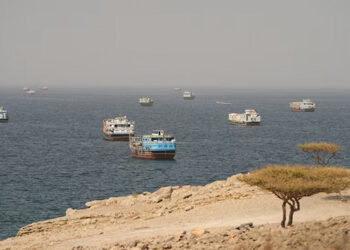
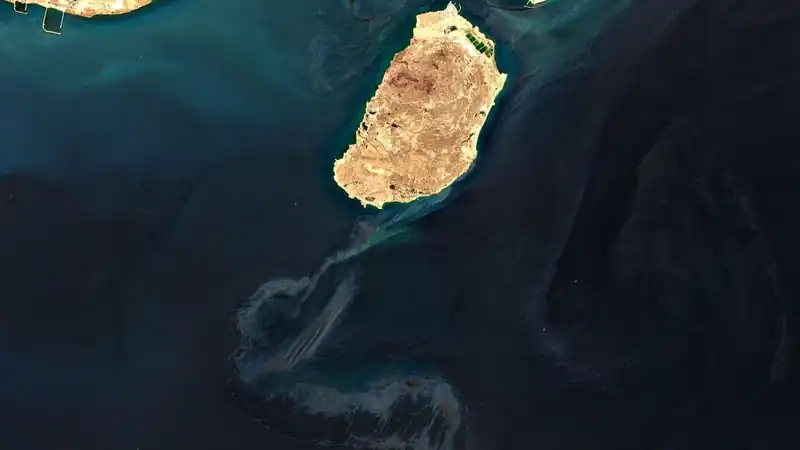
According to Steel World Review (Gozideh Jahan Foulad), the ongoing war in the Persian Gulf has brought, on top of its human and economic toll, spreading oil pollution, destruction of sensitive marine habitats and growing risks to water resources and fisheries. While a BBC Persian media report speaks of a fourfold increase in the extent of oil slicks in a year-on-year comparison, University of South Florida research recorded a nearly twofold rise in the weighted surface-oil area index in March 2026 compared with the baseline.
A scenario-based estimate drawing on historical oil clean-up costs suggests that cleaning up a single hypothetical 50,000-tonne spill alone could cost hundreds of millions of dollars, a figure that does not include long-term ecological damage. In the same region, billions of dollars are being invested in developing low-emission steel.
Brian Barnes, a researcher at the University of South Florida, told CNN that attacks on vessels have created slicks that in some cases stretch hundreds of kilometres from the site of the incident. Bernhard Riegl, a marine biologist at Nova Southeastern University in Florida, has also warned about the long-term persistence of pollution in coastal sediments and the damage to marine habitats.
According to the latest Greenpeace findings, published on 12 November 2026, more than 500 possible oil slicks have been identified in the Persian Gulf, the Strait of Hormuz and the Arabian Sea since the war began on 28 February. The combined daily footprint of these slicks reaches about 20,000 square kilometres, a cumulative figure that does not mean that this entire area is polluted at the same time.
Satellite images have shown pollution near the mangrove forests on Qeshm, the protected island of Sheedvar, the Minab river delta, and the coasts of Oman and the UAE. In one October incident, an oil slick caused by damage to the tanker Gem No 2 near the UAE stretched more than 35 kilometres. Following the incident, UAE authorities closed part of the coastline, began clean-up operations and put monitoring of desalination plants on the agenda.
Experts warn that oil remaining in sediments, mangrove roots and the seabed could affect aquatic life, birds and the marine food chain for years. Scientific studies of pollution from past wars have also shown that traces of some oil spills remained detectable even decades later.
The crisis comes as the Persian Gulf states are making major investments to cut carbon emissions in steelmaking.
In Oman, the Jindal Steel Duqm low-emission steel project, with a declared investment of about $3 billion and a target capacity of 5 million tonnes a year, is under development. The complex is designed to use direct reduction technology and to allow for the use of green hydrogen in the future.
In the UAE, EMSTEEL, in cooperation with Masdar, has launched a pilot project to produce steel using green hydrogen. The technology has been developed to reduce dependence on fossil fuels and limit carbon dioxide emissions.
These two tracks reveal a major economic and environmental contradiction: on one side, multibillion-dollar investment to reduce the climate impact of industrial production; on the other, the new costs of cleaning up oil, restoring coastlines and protecting habitats damaged during the war.
Despite the extent of the pollution observed, no independent estimate of the total cost of the ongoing war’s environmental damage has yet been published. It therefore cannot be directly equated with the investments in low-emission steel.
Even so, the central question remains: in a region where billions of dollars are being invested to reduce the industry’s environmental impact, who will pay for repairing the environmental destruction caused by the war, and from what resources?
Sources: Greenpeace and The Guardian, 12 November 2026; research by Jiao, Hu and Barnes, University of South Florida, 2026; CNN, 23 October 2026; United Nations University, 14 August 2026; Oman Special Economic Zones Authority; EMSTEEL and Masdar.