Steel demand growth accelerates in the Middle East
A 3.4% rise in demand in 2025, with a projected 4.7% surge in 2026
Saudi Arabia: The main driver of the regional market through its Vision 2030 projects
Analysis and publication by Specialized Iranian Steel Media – Steel World Review
According to international assessments of the steel market, demand in developing countries (excluding China) is expected to grow by 3.4% in 2025, with forecasts indicating an increase to 4.7% in 2026. Among these countries, Saudi Arabiaand other Middle Eastern economies play a significant role in strengthening global steel demand, driven by large-scale construction and infrastructure projects.
The Middle East: One of the main drivers of global demand growth
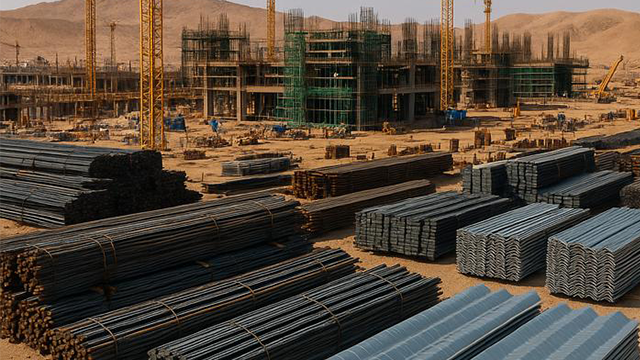
In global steel market reports, the Middle East is identified as a core hub of sustained demand growth. Rapid infrastructure development, the modernization of transport networks, the expansion of construction projects, and rising industrial investment have turned countries in this region into major buyers of steel products.
audi Arabia stands out in this landscape, particularly through its large-scale projects such as:
• NEOM
• The Line
• Qiddiya
• Red Sea Project
• Expansion of ports and logistics projects
• Development of refineries and petrochemical complexes
These programs, implemented under the framework of Saudi Vision 2030, absorb millions of tons of construction steel, long products, hot-rolled coil, galvanized sheet, and alloy steel each year.
Why has Saudi Arabia become the driving engine of steel demand?
1. The largest contemporary urban development program
Saudi Arabia currently hosts the highest concentration of active construction projects in the world.
2. Inflow of foreign investment
By attracting international companies, Saudi Arabia has accelerated project execution and increased demand for raw materials — especially steel.
3. Focus on energy and infrastructure industries
The expansion of refineries, power plants, and energy transmission lines has multiplied steel consumption.
4. Industrialization policies and economic diversification
The construction of industrial towns and the development of domestic production has expanded the need for steel equipment and structures.
Impact of this trend on the global steel market
The rising demand in the Middle East, especially as Europe faces a slowdown and China experiences reduced consumption, has led to:
• An increase in exports from Asia and the CIS to this region
• Competition to supply Saudi projects intensifies
• Regional steel premiums in the Mediterranean and Persian Gulf strengthen
• Regional producers (Iran, Turkey, UAE, Oman) encounter new export opportunities
Given the relative stability of oil prices and the financial capacity of regional governments, the Middle East is expected to remain one of the main drivers of global steel consumption from 2025 to 2027.
Opportunities Ahead for Iran
For Iranian producers, the current trend carries several key messages:
• The Persian Gulf and Saudi markets have a high dependency on long products, construction sections, and hot-rolled sheets.
• The short geographical distance makes transportation costs competitive for Iran.
• Vision 2030 projects have created the capacity to secure long-term contracts.
• Exports via Oman and the UAE can create a supply chain advantage.
This trend can stabilize and strengthen Iran’s share in the regional market, even despite political constraints.