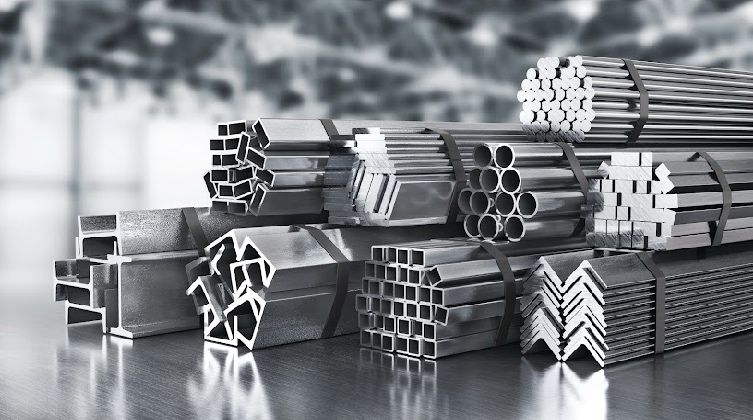
These days, the situation of steel product exports is extremely uncertain and somewhat stagnant. There are many reasons behind this situation, which will be enumerated one by one. First, the increase in the #price of raw materials required in the steel industry is a major factor. The next factor is the low rate of the official exchange compared to the free market rate, so that currently the #free_exchange_rate is about 25% higher than the official rate. Although steel exports are not profitable under such conditions, other factors can also be listed and added to the aforementioned problems. One of the most important of these factors is the sanctions on Iranian banks, meaning that exporters are forced to pay a percentage of the transaction amount as fees to receive their payments.
Currently, #Iraq constitutes the most important market for Iranian steel exports; however, unfortunately, this country has recently imposed #customs duties of up to $150 per ton, which has drastically reduced the profitability of rebar exports. At present, rebar exports are generally unprofitable, and in most cases, factories incur losses from exports. It should be emphasized that even under these conditions, if certain measures are observed, a minimal profit can still be achieved.
Another issue in exporting goods is the presence of competitors who offer their products at very low prices. The primary reasons for low competitor prices are: first, producing goods of low quality, and second, some sell below production cost because they have no customers. Such a situation leaves no profit for the manufacturer. However, if a consensus among domestic producers exists, it can have positive effects on #pricing.
Regarding the specific situation of Jahan Foulad Gharb and Sima Foulad Jahan factories, the major problem is the lack of raw material supply. This problem at Jahan Foulad Gharb has been somewhat resolved through new decisions in raw material procurement, but at Sima Foulad Jahan, the raw material shortage remains a serious issue. It is hoped that with proper managerial decisions, the raw material supply problem at Sima Foulad Jahan will also be resolved.
An important point is that currently the demand for rebar exports is higher than for beams, but unfortunately Sima Foulad Jahan has not yet utilized this potential capacity.
Another critical factor affecting steel prices and customer satisfaction is timely delivery of goods. We have managed to approach an ideal condition in Jahan Foulad Gharb, but at Sima Foulad Jahan, this remains a serious problem. If we can ensure fast delivery, the selling price per ton could increase by approximately $15–20. This, of course, is only a minimal profit margin that allows the factory to continue production. Sima Foulad Jahan requires a fundamental review regarding raw material supply and production and sales policies.
The new plan we are pursuing is marketing specialized products with high added value. God willing, we hope to achieve positive results in this area.
An important and noteworthy point is that several Kurdish-speaking customers empathize with us and are truly disappointed that we are not fully utilizing the capacities of our factory. Some other factories, despite having lower production capacities and technical facilities than us, have managed to make the most of the current situation. We are well-positioned in terms of exports, and our competitors do not have these facilities and this position, yet they are effectively taking advantage of the situation.
Mr. Mohammad Khalvandi – Sales Manager of Jahan Foulad Gharb