Worldsteel Statement: China’s excess steelmaking capacity is unlikely to be resolved anytime soon.
10 December 2025 – According to the steel-industry outlet Steel World Review.
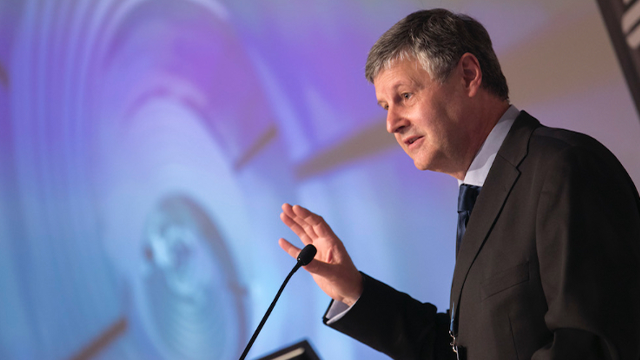
Edwin Basson, Director General of the World Steel Association (Worldsteel), stated that China’s chronic excess steelmaking capacity, a persistent structural oversupply, cannot be adjusted in the short term due to its deep linkage with the country’s economic structure.
He explained in an interview with Bloomberg:
“Shutting down a steel plant affects a chain of domestic sectors across China’s economy. Therefore, there is no quick or low-cost solution for reducing capacity.”
The expanding trend of trade restrictions against Chinese steel
Basson noted that steel was one of the first sectors targeted by U.S. import tariffs, and that other countries, including Vietnam, have also imposed anti-dumping duties on Chinese steel products. He added:
“This trend has effectively pushed back nearly 20 years of relatively free steel trade. The open market that existed between 2000 and 2020 is now disappearing. The free movement of goods across continents has become a major challenge.”
Declining domestic demand and China’s new export highs
According to Worldsteel, China’s steel demand will decline by about 2 percent in 2025, followed by a further 1 percent drop in 2026.
As a result, Chinese producers have turned to the export market, and despite the restrictive trade environment, China’s steel exports in the first eleven months of 2025 surpassed 100 million tonnes, approaching a historic record.
This trend has also pushed China’s trade surplus beyond the one-trillion-dollar mark for the first time.
Meanwhile, iron ore futures on the Singapore Exchange fell 0.9 percent on the first trading day of the week, reaching 102.45 dollars per tonne.
A Fragmented Global Market and the Difficult Path Toward “Low-Carbon Steel”
Rezwan Jangua, Worldsteel’s Head of Technology, warned that the fragmentation of the global steel market has created obstacles for the industry’s decarbonization efforts.
He said:
“Steel accounts for about 8 percent of global carbon emissions. Decarbonizing this sector requires an unprecedented level of international cooperation. However, the more fragmented the markets become, the harder it is to achieve the necessary coordination.”
He emphasized that decarbonization technologies do exist, but challenges such as energy supply, costs, and policy misalignment have slowed progress:
“If countries do not act in coordination, each will only optimize its own system, and no global outcome will be achieved.”