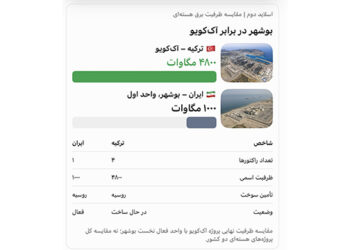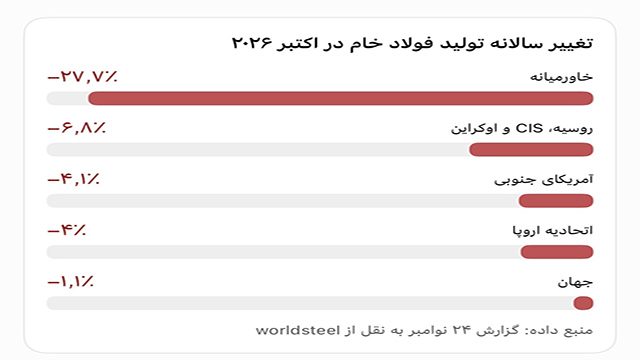
The latest report by the World Steel Association shows a decline in global crude steel production in October 2026. The Middle East recorded the steepest production drop among all global regions, while Iran lost its tenth-place position to Vietnam.
According to Steel World Review, the World Steel Association (worldsteel) released its latest global crude steel production statistics on November 24, 2026, corresponding to December 3, 1405, in the Iranian calendar.
According to the report, crude steel production across the 70 reporting countries reached 142.4 million tons in October, down 1.1% compared with the same month last year.
Combined production in these countries during the first ten months of 2026 also declined by 0.8%, reaching 1.5093 billion tons.
Middle East Records the Steepest Production Decline
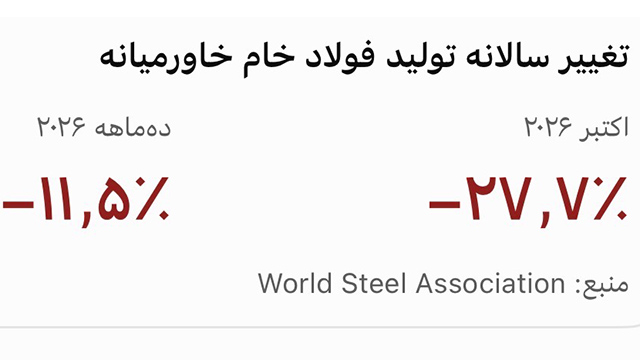
Crude steel production in the Middle East reached 3.9 million tons in October, representing a 27.7% decline compared with October 2025.
The region’s cumulative crude steel production during the first ten months of the year also fell by 11.5%, reaching 40.8 million tons.
Iran Loses Tenth Place to Vietnam
One of the most significant findings in the World Steel Association’s latest report is Iran’s exit from the list of the world’s ten largest crude steel producers based on production performance during the first ten months of 2026.
At the end of 2025, Iran ranked as the world’s tenth-largest crude steel producer, with output of 32 million tons, while Vietnam ranked eleventh with 24.7 million tons.
Vietnam has now moved into tenth place, producing 25.9 million tons of crude steel in the first ten months of 2026 and recording growth of 29%. The country’s steel production also experienced a significant increase of 28.5% in October.
Shifting Production Dynamics in the Global Steel Market
While China’s steel production declined by 2.8% during the first ten months of the year, India recorded growth of 5.2% and Türkiye registered an increase of 6%.
Iran’s exit from the world’s top ten steel producers comes as the country’s steel industry faces electricity and gas restrictions, rising energy costs and disruptions to production capacity.This development serves as a warning about the industry’s international position.
The rapid expansion of production capacity in emerging economies such as Vietnam also demonstrates that maintaining Iran’s global position depends not only on installed capacity, but also on sustained production, energy infrastructure development and improved efficiency.