As gas consumption rises and reconstruction of damaged South Pars facilities continues, government officials have presented varying estimates of the country’s gas imbalance. Despite compensating for the production loss from the damaged Phase 14 platform, the risk of energy supply restrictions for industries remains a concern during the winter.
According to Steel World Review, as winter approaches and natural gas consumption increases, recent statements by officials from the Ministry of Petroleum and the government indicate that Iran’s gas network is facing a significant supply-demand imbalance. If colder weather intensifies and household demand rises, this situation could affect energy supplies to major industries, particularly direct reduced iron and steel production facilities.
According to reports published in recent days, official estimates of the country’s daily gas shortfall range from 400 million to 530 million cubic meters. The difference reflects estimates announced by various officials, and no common calculation basis has yet been published to fully reconcile these figures.
Warning of a 530 Million-Cubic-Meter Gas Shortfall
Mohammad Jafar Ghaempanah, Executive Deputy to the President, stated in remarks published on November 11 that the country’s gas imbalance had reached approximately 530 million cubic meters per day, taking into account damage to part of its production capacity.
Referring to a shortfall of approximately 300 million cubic meters last year, he explained that damage to gas production capacity had placed additional pressure on the energy supply network.
Meanwhile, Fatemeh Mohajerani, government spokesperson, separately estimated that the potential gas shortfall this winter could reach approximately 430 million cubic meters. She warned that continued high consumption could lead to gas supply restrictions in some parts of the country, including Tehran.
Saeed Tavakoli, CEO of the National Iranian Gas Company, also reported on November 12 that the network was facing an imbalance of approximately 400 million cubic meters under peak-demand conditions.
These figures cannot be considered equivalent without taking into account differences in timing, consumption conditions, and calculation methods.
Reconstruction of Gas Facilities and Recovery of Part of Production Capacity
Part of the current crisis is linked to damage sustained by gas infrastructure during the war. According to officials, damage to four gas processing units in the early stages of the war had reduced
daily processing capacity by approximately 230 million cubic meters.
In his latest report, the CEO of the National Iranian Gas Company stated that more than 95 million cubic meters per day of the lost capacity had been restored.
However, the recovery of part of the processing capacity does not mean that the supply-demand imbalance has been fully resolved. Gas consumption rises as temperatures fall, while the network must continue meeting the needs of households, power plants, and industries.
Latest Situation at the Damaged South Pars Phase 14 Platform
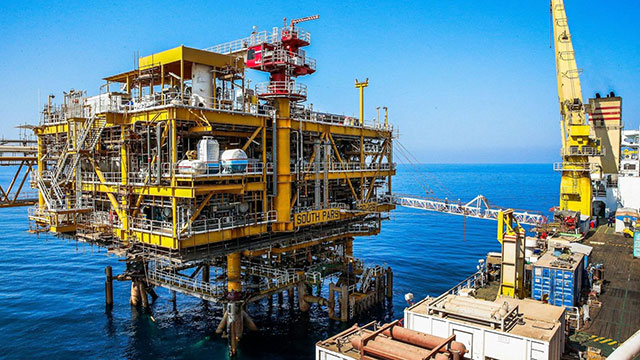
On November 10, 2026, a fire broke out at Platform D of Phase 14 of the South Pars gas field. According to published reports, the fire was brought under control and the personnel on the platform were evacuated without any fatalities.
The platform’s production capacity before the incident was reported at approximately 14.5 million cubic meters of gas per day.
Hamid Bord, Acting Minister of Petroleum, announced on November 13 during a visit to the damaged platform that preparations for reconstruction and equipment repairs had been made, and that work to return the platform to production was on the agenda.
According to him, the gas lost following the platform’s shutdown had been offset by increasing production from other South Pars platforms.
Therefore, the platform’s suspension should not be interpreted as an equivalent and definitive reduction in the total production of the entire field. In addition, the final cause of the fire has not yet been independently confirmed in the reports reviewed.
Warning of Gas Supply Strains in 11 Provinces
The CEO of the National Iranian Gas Company has stated that 11 provinces could face gas supply strains during the winter peak-demand period.
Mazandaran, Golestan, and North Khorasan are among the provinces identified in official reports as more vulnerable due to consumption patterns and network constraints.
Officials have also reported that the country’s daily gas consumption increased by approximately 60 million cubic meters between November 7 and 12.
This increase in demand, while production and processing capacity have yet to return to pre-damage levels, places additional pressure on network management.
Steel Industry Exposed to Energy Restrictions
Iran’s steel industry is considered particularly vulnerable to gas supply imbalances because of its extensive use of natural-gas-based direct reduction technology.
In direct reduced iron production facilities, natural gas serves not only as an energy source but also as a feedstock for producing reducing gas.
Therefore, reductions in gas allocations to these facilities can directly affect DRI output.
Disruptions to DRI production could, in turn, make it more difficult to supply raw materials to electric arc furnaces. Reduced gas supplies to power plants could also intensify electricity restrictions, placing additional pressure on the steel production chain.
Rolling mills and other downstream industries also depend on a stable energy supply to fuel their industrial furnaces.
However, as of the preparation of this report, no comprehensive official statistics have been published on the extent of steel production losses caused by gas restrictions in November 2026 or on the confirmed winter gas allocations for steel facilities.
Gas Imbalance Persists Despite Mitigation Measures
The National Iranian Gas Company has reported that liquid fuel reserves for power plants and industrial use have increased to more than three billion liters and that gas storage in underground reservoirs has been strengthened.
These measures are intended to reduce pressure on the network during periods of peak consumption. Nevertheless, a stable energy supply for industries will continue to depend on the extent of production capacity recovery, the severity of winter temperatures, and natural gas consumption patterns.
Under current conditions, the most important issue for steel producers is determining how much gas will be allocated to direct reduction units and other segments of the production chain dur
ing the colder months.
Sources: Mehr News Agency, November 11–13, 2026; statements by the Executive Deputy to the President, the CEO of the National Iranian Gas Company, and the Acting Minister of Petroleum; Iran newspaper, November 14, 2026; Reuters, November 10 and 11, 2026.