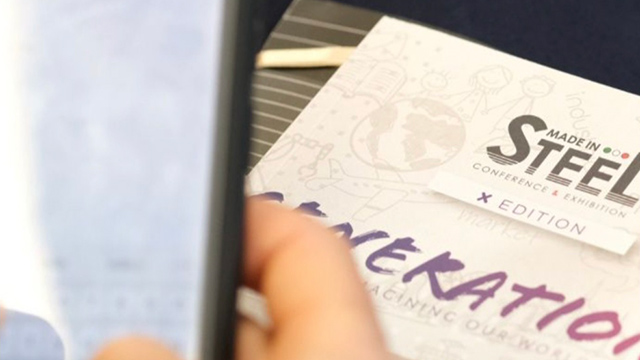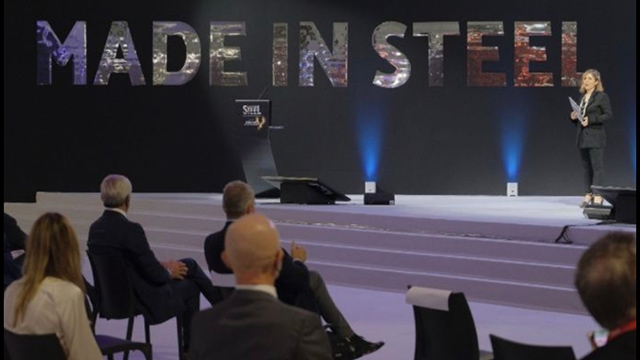
MILAN Every two years, representatives from steelmaking plants, trading companies, and government ministries from dozens of countries gather in a massive exhibition hall on the outskirts of Milan; not merely to buy and sell, but to debate about carbon-reduction targets that keep shifting, about supply chains repeatedly disrupted by war and tariffs, and about whether artificial intelligence will fundamentally transform an industry that has changed its methods of production only a handful of times in a century. The event is called Made in Steel, and in the two decades since its modest beginnings, it has become something its founders may not have foreseen: a place where the steel industry sits down to converse with itself about its own future.
From a Regional Exhibition to a Global Event
The first edition of this event was held in September 2005 at the Brixia Expo exhibition center in Brescia a relatively local event, rooted in Italy’s dense cluster of steelmakers and metal industries. But steel is a globalized industry, one whose supply chains are intertwined and vulnerable to shared forces such as energy prices, trade policies, and climate regulations — regardless of where the furnaces themselves are located. As these pressures intensified, the ambitions of the event grew as well. In 2019, the organizers moved the venue to the much larger Fieramilano Rho complex in Milan — a move that reflected the expanding scope of the exhibition. By the 2025 edition, Made in Steel had hosted 387 companies from 81 countries and more than 19,000 visitors figures that would have seemed unimaginable to its founders and that now place this event among the most important global gatherings in the industry.
The Institution Behind the Event
Made in Steel is organized by Siderweb, an Italian research and media institution that has long established itself as an analytical reference point in the steel trade. Its CEO, Paolo Morandi, leads both the institution and the event a dual role that has allowed Siderweb’s research output market data, policy analysis, forward-looking studies to flow directly into the heart of the event itself, rather than remaining merely a separate publishing arm. This structure matters: it is part of the reason Made in Steel functions less like an ordinary trade fair and more like an ongoing institutional interpretation of the state of the industry.
A New Partner, and a Condition Tied to Internationalization
In February 2026, this structure shifted once again. Fiera Milano, the exhibition group that operates the venue itself, acquired a stake in Made in Steel S.r.l. — a move the organizers describe as a strategic partnership aimed at deepening the event’s international presence. For an event that had previously been striving to move beyond the limits of its regional roots, the entry of one of Europe’s largest exhibition operators as a shareholder signals an intent to compete at the level of the world’s largest gatherings in the industry, not merely gradual growth.
What Is the Coming Edition Really About?
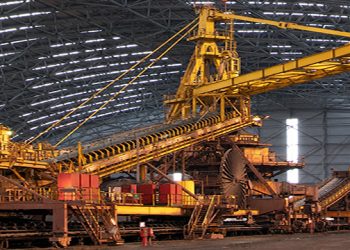
The themes the organizers have chosen for Made in Steel 2027 — sustainability, technological innovation, artificial intelligence, geopolitics — may at first glance seem like the standard vocabulary of any industrial conference in 2026. But for steel, each of these carries unusual weight. Decarbonization in steelmaking remains one of the hardest challenges in industrial climate policy, given the industry’s reliance on coal-fired blast furnaces. Geopolitical rifts have already redrawn the map of steel production and sales destinations. And the application of artificial intelligence in an industry built on heavy machinery and centuries-old metallurgical processes still feels, to many in the field, more like a promise than a reality. Made in Steel 2027, set to take place in May at the Milan exhibition center, will be where that promise is tested against the skepticism of an industry that does not readily embrace change.