The 2050 Industry & Steel Outlook Event
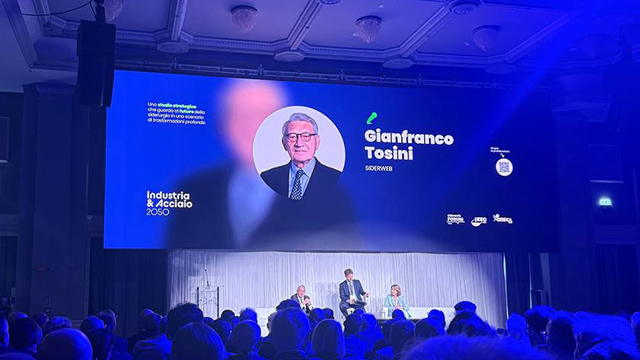
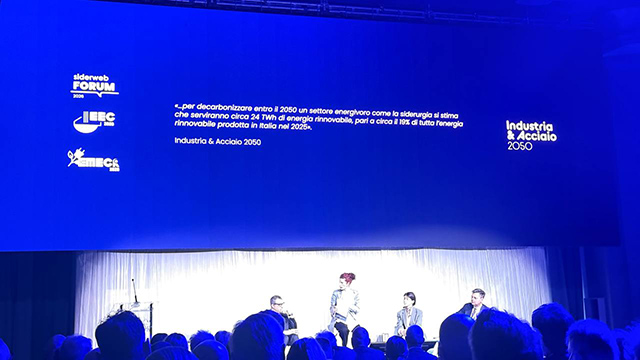
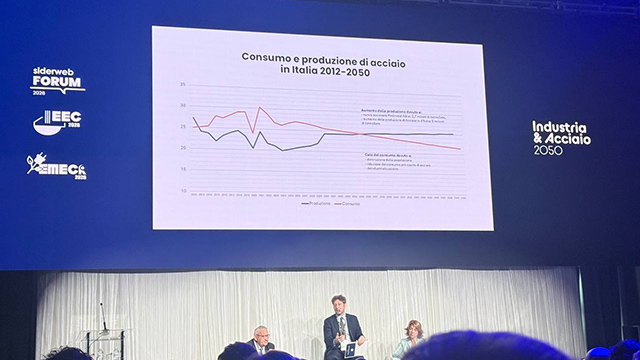
PART 1 | The Future of Steel: Why AI may become more important than production capacityDuring siderweb FORUM 2026 – Industria & Acciaio 2050 in Milan, one message repeatedly emerged across discussions: The future competitiveness of industry may no longer depend primarily on who produces more or who has cheaper energy.
Instead, competitive advantage could increasingly depend on:
- · Who understands change faster
- · Who predicts risks earlier
- · Who adapts production intelligently
- · Who integrates AI with industrial expertise
One concept particularly captured this shift: “Industria Pensante” — The Thinking IndustryThe idea is profound: Future factories may not simply manufacture steel. They will analyze, learn, optimize and support decision-making.This raises an important question: Will tomorrow’s leading steel companies be those with larger plants… or those capable of making smarter decisions?
At siderweb FORUM 2026, attended by industry leaders, experts and international stakeholders, discussions suggested that AI is gradually moving from a supporting tool toward becoming part of industrial strategy itself. For industries such as steel — with massive datasets, energy-intensive processes and increasing pressure on efficiency — this transition may become transformational.One of Steel World Review’s key takeaways from the forum: The future competition in steel may increasingly be between intelligent factories rather than simply productive factories.
PART 2 | Why AI is changing the role of engineers and industrial workforceAI will not simply replace people. It may redefine valuable expertise.One of the strongest messages discussed during siderweb FORUM 2026 – Industria & Acciaio 2050 was not about technology alone.
It was about people.Across Europe, industry is already facing shortages in:
- · Automation specialists
- · Industrial technicians
- · Data experts
- · Advanced operators
- · Digital and AI-skilled professionals
At the same time, AI adoption is accelerating. This creates an important shift: The future model may not be Human vs AI — but rather Human + AI + Automation.The implication is significant.
Routine activities may increasingly become automated.
However, the value of human expertise could rise in areas such as:
- Asking better questions
- Understanding systems
- Strategic decision-making
- Interpreting complex scenarios
- Managing hybrid human-machine environments
A striking idea shared during discussions: “To obtain intelligent answers, first we need intelligent questions.”Perhaps future industrial leaders will not only be engineers. They may need to become: Engineers + analysts + strategists + AI usersOne of Steel World Review’s reflections from the forum: The most valuable industrial capability by 2050 may not simply be technical expertise… but the ability to combine experience, systems thinking and AI.
PART 3 | Future steel competitiveness may depend less on equipment… and more on intelligenceOne of the most thought-provoking conclusions emerging from siderweb FORUM 2026 – Industria & Acciaio 2050 was this: Industrial investment itself may be changing.Traditionally, growth meant: More machinery, more infrastructure, more physical assets.Increasingly, value creation may shift toward: Data, Algorithms, Predictive systems, Industrial AI, Continuous learning, Intelligent optimization. In other words: Part of industrial CAPEX may gradually become digital investment.For steelmakers facing:
- Energy challenges
- Decarbonization pressure
- Resource constraints
- Workforce shortages
AI may become not merely an efficiency tool… but a competitive necessity.
One of Steel World Review’s main observations from attending the forum: The future of steel appears unlikely to be defined only by green transition. It may be shaped by the interaction between: Human intelligence + AI + industrial culture + strategic thinking
Perhaps the defining question for steel companies by 2050 will not be “Who produces more steel?” — but: Who learns faster? Who understands earlier? Who decides smarter?That may become the next industrial advantage.
 |
 |