According to Chilan
As the scars of war remain fresh and corporate profit margins collapse, steel industry executives and members of parliament face an unanswered question: what happens when a decades-old advantage disappears?
Tehran For years, Iran’s steel industry rested on a simple bargain: cheap, government-subsidized energy in exchange for an export engine that kept the country’s foreign currency reserves afloat. That bargain is now collapsing.
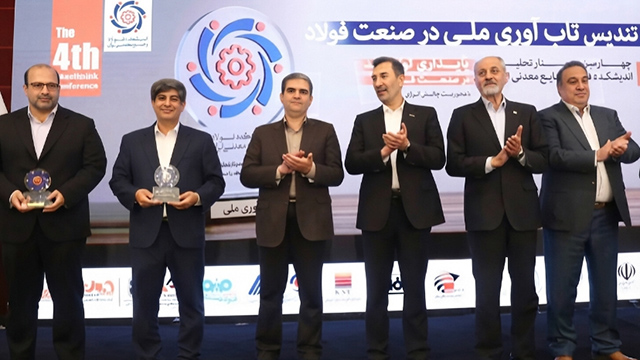
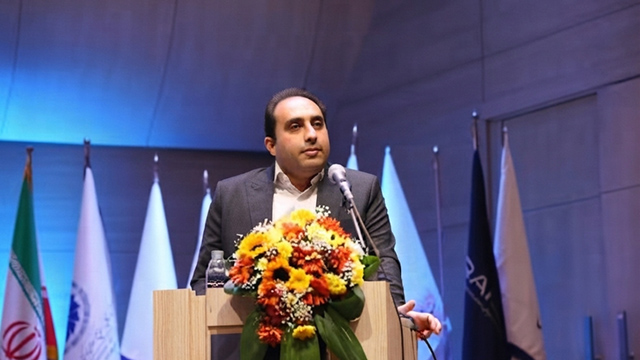
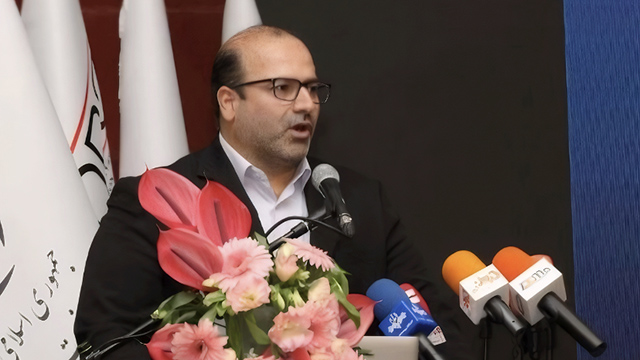
At this week’s analytical seminar held by the Iran Steel and Mining Industries Think Tank, the mood among the gathered executives, MPs, and regulatory officials resembled a sober assessment more than a celebration of achievements the tone of an industry reviewing what it has already lost while bracing for further losses ahead. The meeting, centered on what officials repeatedly called the “energy challenge,” brought together some of the country’s most powerful steel executives alongside senior officials from the Ministry of Industry, Mine and Trade, members of parliament’s Industries Commission, and the head of the Iranian Mines and Mining Industries Development and Renovation Organization (IMIDRO).
The figures presented painted a grim picture. According to Bahram Sobhani, head of the Iranian Steel Producers Association, the profit margins of large listed steel companies have fallen to around 6 percent, down from 33 percent six years ago. He said industrial electricity prices have risen roughly 3,500 percent over the past six years, while natural gas prices have climbed more than 5,000 percent over the same period even though steel accounts for only a small share of the country’s gas consumption.
An Industry Rebuilding Under Fire
Running beneath the seminar was the war. Executives from several of Iran’s largest steelmakers including Mobarakeh Steel, Khuzestan Steel, Sefid Dasht Steel, and Atiyeh Steel of the Middle East described plants that had been directly struck by missiles in recent months and are now being rebuilt largely without government financial assistance.
Amin Ebrahimi, CEO of Khuzestan Steel, said the company had generated about $4 billion in foreign currency earnings over the past four years and directly employs 18,000 people a scale that, he said, made it a deliberate target. He said 12 furnaces were hit and total damages are estimated at €769 million; the company’s steelmaking unit has since returned to full production relying solely on internal resources, without any banking support.
Tahmoures Javanbakht said two missiles had knocked the plant’s production offline and warned that without intervention, Iranian steelmakers could fall below breakeven next year. Yarmohammad Mohammadi of Atiyeh Steel of the Middle East described a rebar rolling mill that was completely destroyed and a sheet rolling mill now operating only six hours a day, with no financial assistance yet reaching the company despite its 800 workers.
Saeed Zarandi, CEO of Mobarakeh Steel Group of Isfahan, the country’s largest producer, framed the moment differently not merely as reconstruction, but as a test of organizational resilience. He said the company lost more than $1.5 billion in revenue between 2023 and 2025, before the war damages, solely due to energy imbalances. Mobarakeh Steel’s future strategy, he said, rests on three pillars: energy self-sufficiency, industrial policy supportive of production, and technological innovation to reduce consumption.
The Deeper Battle: Who Gets the Energy?
Beneath the war damage lies a more structural dispute over how energy is allocated in Iran one that officials say will outlast the current crisis.
Mostafa Rajabi Mashhadi, deputy energy minister, acknowledged that the government faces “resource constraints” in expanding power generation, even as demand grows roughly 5 percent annually and requires 4,000 megawatts of additional capacity each year. He warned that the coming winter could be the toughest yet for gas supply, given lost capacity.
Members of parliament spoke more sharply. Ehsan Qazizadeh Hashemi, a member of parliament’s Industries and Mines Commission, said 80 percent of the country’s electricity and gas output goes to the residential sector, squeezing industry and agriculture; he called for separating the energy needs of petrochemical plants l for which gas is a feedstock from steelmakers, which have no such need. Gholamreza Dehghan Nasrabadi, another member of the commission, was more blunt, questioning the efficiency of the country’s energy management given that Iran is the world’s second-largest gas producer yet still suffers from chronic shortages.
Amir Tavakoli Roodi, also of the commission, said the country’s political systems have lacked a coherent strategy for decades, noting that warnings about the water crisis have gone unanswered for 25 years.
Mohammad Kazem Sabbaghi, head of the Steel Association’s Energy Committee, perhaps offered the starkest picture of the imbalance: Iranian steelmakers generate 73 percent of their own electricity, compared with roughly 30 percent for steelmakers globally a burden that has pushed the industry into the unfamiliar business of producing its own energy, at the cost of reduced profitability. He said the share of energy costs at listed steel companies rose 46 percent in the past year alone.
A Market Preparing for a Post-Subsidy World
Perhaps the most significant remarks came from Seyed Abbas Hosseini, advisor to the Minister of Industry, Mine and Trade and a member of IMIDRO’s board, who said Iran’s cheap-energy advantage the very foundation on which its steel industry was built may not survive regional developments. He asked: if that advantage disappears, what replaces it? He urged the industry to begin planning now for a post-war market built on specialty and alloy steels rather than general commodity volumes.
Ardeshir Saadmohammadi, CEO of the Mines and Metals Development Investment Company, put a timeframe on it: he said that within the next two to three years, Iran’s domestic energy prices will approach global levels, eliminating the cost advantage entirely and further eroding the sector’s appeal to investors. He noted that the total market value of Iran’s stock exchange is only $85 billion a figure he called disproportionately low and said technological upgrades could still cut up to 30 percent of energy costs across the steel chain, provided the necessary investment materializes.
For an industry that endured direct strikes on its furnaces only months ago, the next battle may be a quieter one: persuading a resource-constrained government to keep subsidizing the very energy that keeps its plants running at all.
 |
 |