Future of Italy’s Largest Steel Complex Hangs in the Balance as Government Pushes for Electric Furnaces and Green Steel
The Milan Court of Appeal has upheld the shutdown of the hot area at the Taranto steelworks, the former Ilva complex and Italy’s largest steelmaking site. The ruling requires operations in the hot area to cease by October 28, 2026, putting the future of one of Italy’s most important industrial assets at a critical juncture while intensifying the debate over steel production, employment and the country’s transition to lower-carbon steelmaking.
On September 11, the court rejected requests by Acciaierie d’Italia and Ilva in Amministrazione Straordinaria to suspend the previous shutdown order. The decision follows an initial ruling issued on July 27, which ordered the closure of the hot area over concerns related to public health and the environmental conditions at the complex.
The original ruling cited the presence of asbestos and particulate emissions and made any resumption of operations conditional on the complete removal of asbestos and the reduction of pollutant emissions to safe levels.
The court also determined that, when weighing the plant’s economic and production interests against the protection of Taranto residents’ health, the right to public health must take precedence.
A Court Ruling with Wider Industrial Implications
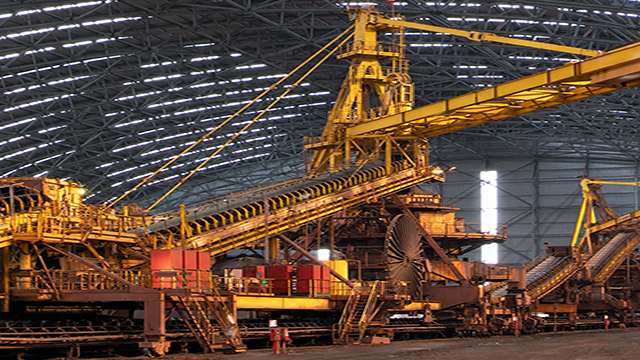
The significance of the decision extends well beyond the future of a single steel plant. The Taranto complex is Italy’s largest steelmaking facility and the country’s only industrial-scale steelworks still producing steel through the blast-furnace route, using iron ore and coal.
The site directly employs around 8,000 people, while a significant number of contractors and downstream businesses also depend on its continued operations. The shutdown of the hot area could therefore have consequences extending beyond the plant’s own production capacity.
Acciaierie d’Italia has warned that beginning the process of cooling the blast furnaces could cause serious and potentially irreversible damage to the facilities. Italian media reports have identified September 16 as a technically critical date, as the natural cooling of the blast furnaces could make it significantly more difficult to bring them back into operation.
Labor unions Fim, Fiom and Uilm have also called on the government to intervene immediately to protect jobs and determine the future of the complex. The unions have warned that the crisis cannot be addressed simply through prolonged use of unemployment-support schemes or large-scale workforce reductions.
Italy Seeks a New Path for Taranto
Despite the court ruling, the government of Prime Minister Giorgia Meloni has not abandoned efforts to preserve steel production in Taranto. Instead, it is increasingly linking the future of the complex to the decarbonization of Italy’s steel industry.
One of the main options under consideration is a gradual shift away from the traditional blast-furnace route toward electric arc furnaces (EAFs) and the use of direct reduced iron (DRI). The government has also raised the possibility of maintaining some form of public participation in the future structure of the complex.
Following the court’s decision, Meloni said the government would continue working to find a solution and described the Ilva case as one of the issues to which her government is devoting significant attention. A new round of talks with local authorities, labor unions and other stakeholders is scheduled for September 15.
Taranto Becomes a Test for Italy’s Steel Transition
The Taranto case now sits at the intersection of three major challenges: maintaining industrial production capacity, protecting employment and reducing the environmental impact of steelmaking.
The shutdown of the hot area could put pressure on Italy’s domestic steel production capacity, while continuing to operate facilities that the court has linked to serious public-health concerns faces significant legal and social obstacles.
Against this backdrop, the future of the Taranto complex could increasingly shift toward electric arc furnaces and DRI-based steelmaking as part of Italy’s broader decarbonization strategy. The outcome will therefore have implications beyond Taranto itself, potentially becoming an important test of how Italy manages the transition toward lower-carbon steel production while seeking to preserve industrial capacity and employment.
Strait of Hormuz transit risk threatens Iran’s steel price advantage
Shipping insecurity has turned insurance and freight costs into a fresh variable in the competitiveness...
Read moreDetails