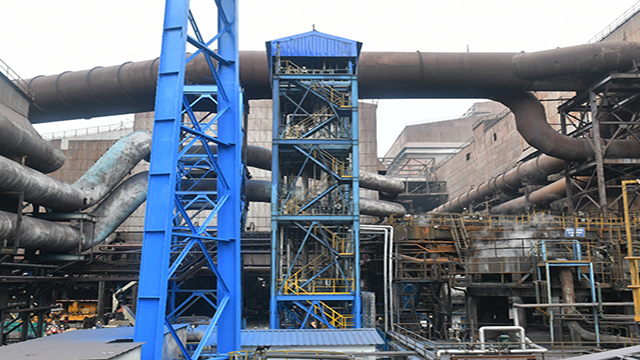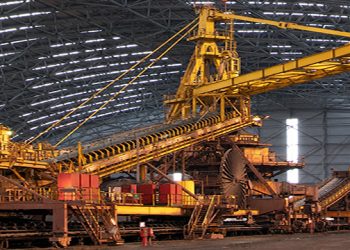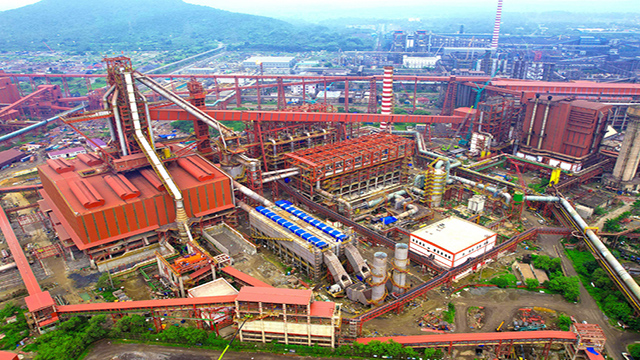
The project has been implemented at the Meramandali steel plant to reduce fossil fuel consumption and carbon dioxide emissions
Report by Steel World Review
Tata Steel has launched a project to inject Coke Oven Gas (COG) into Blast Furnace No. 1 at its Meramandali steel plant in Odisha, a project the company describes as the first of its kind in the Indian steel industry.
Launched on September 10, 2026, the project is part of Tata Steel’s efforts to develop low-carbon production technologies and advance toward its goal of achieving net-zero emissions by 2045.
Subodh Pandey, Vice President, Technology, Research & Development, NMB and Graphene at Tata Steel, said the project would strengthen Tata Steel’s position in sustainable production by increasing the use of process gases and reducing dependence on external fossil fuels. He said the company remains focused on testing, developing and scaling low-carbon technologies to accelerate its path toward achieving net-zero emissions by 2045.
Sudhir Kumar Mehta, Vice President, Operations, Tata Steel Meramandali, described the project as an example of the company’s continued efforts by its teams to improve efficiency while reducing environmental impacts. According to him, using Coke Oven Gas in the blast furnace process enables more efficient and cleaner operation of the process.
Using Coke Oven Gas in the Blast Furnace Process
In an integrated steel plant, Coke Oven Gas, a by-product gas rich in hydrogen and hydrocarbons, is typically used for power generation, heating processes or flaring.
With the support of its technology partner, Paul Wurth-SMS, and equipment supplier, Kobelco, Tata Steel has successfully implemented the injection of the gas into the blast furnace through the tuyeres.
According to the company, in this process, Coke Oven Gas replaces fossil fuel as a reducing agent, thereby reducing the environmental impact of the production process.
Tata Steel said the project, in addition to reducing fossil fuel consumption and CO₂ emissions, enables the blast furnace to operate with a three-fuel system. This feature can increase the furnace’s operational flexibility and efficiency.
The company also said that, through the safe and sustainable use of advanced injection technologies, the project strengthens Tata Steel’s position in the development of green steel production.
Tata Steel Continues Testing Low-Carbon Technologies
Tata Steel has previously worked on the use of low-carbon technologies in blast furnaces. The company has successfully tested the injection of coal-bed methane, hydrogen and biochar into blast furnaces.
About Tata Steel
With an annual crude steel production capacity of 36 million tonnes, Tata Steel Group is one of the world’s major steel producers and is among the most geographically diversified steel groups globally
The group recorded consolidated revenues of approximately $26 billion in the financial year ended March 31, 2026.
Tata Steel Limited, together with its subsidiaries, associates and joint ventures, operates across five continents and has a workforce of more than 77,000 people. The group is a Great Place to Work -certified organisation.
Tata Steel has announced a target of achieving net-zero emissions by 2045.
The company is also pursuing a multi-year digital technology-led business transformation and has set its ambition to become a leader in digital steelmaking.Tata Steel’s plants in Jamshedpur, Kalinganagar and IJmuiden have received the Global Lighthouse designation from the World Economic Forum. According to the company, 78 percent of Tata Steel’s steel is produced at these Global Lighthouse sites
Tata Steel also received the Digital Enterprise of India – Steel award from Economic Times CIO in 2024.
In 2023, the company received the Global Diversity Equity & Inclusion Lighthouse designation from the World Economic Forum.
Tata Steel has been included in the DJSI Emerging Markets index since 2012 and has consistently ranked among the top 10 steel companies in the DJSI Corporate Sustainability Assessment since 2016.
Tata Steel’s Jamshedpur plant was the first site in India to receive ResponsibleSteel certification. The company’s Kalinganagar and Meramandali plants subsequently received the certification as well.
In India, more than 90 percent of Tata Steel’s steel production is now carried out at ResponsibleSteel -certified sites.
Tata Steel has also received numerous awards and recognitions, including the Prime Minister’s Trophy for the Best Integrated Steel Plant for 2016–2017, the Steel Sustainability Champion 2026 title from worldsteel for the ninth consecutive year, the leader title in the CDP 2024 Supplier Engagement Assessment, the top position among iron and steel companies in Dun & Bradstreet’s list of the Top 500 Companies in India in 2022, the No. 1 ranking as India’s most valuable mining, iron and steel brand in 2026 by Brand Finance, the Most Ethical Company award from the Ethisphere Institute in 2021, and the CII Sports Business Award 2025 in the category of “Legacy of Excellence in Sports Support.”
The company has also received awards including Legal Team of the Year – Manufacturing at the 15th Legal Era Indian Legal Awards in 2025–2026, the 2023 Global ERM Award of Distinction at the 2023 RIMS ERM Conference, the Masters of Risk – Metals & Mining title at the 12th India Risk Management Awards, the ICSI Business Responsibility and Sustainability Award 2023 for its first Business Responsibility and Sustainability Report (BRSR), and the Excellence in Financial Reporting FY20 award from ICAI, among several other honours and recognitions.