Four Hours of Talks, One Recurring Demand: Ending Iran’s Industrial Power Crisis
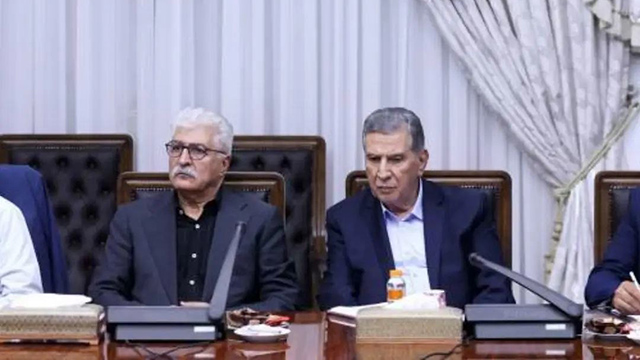
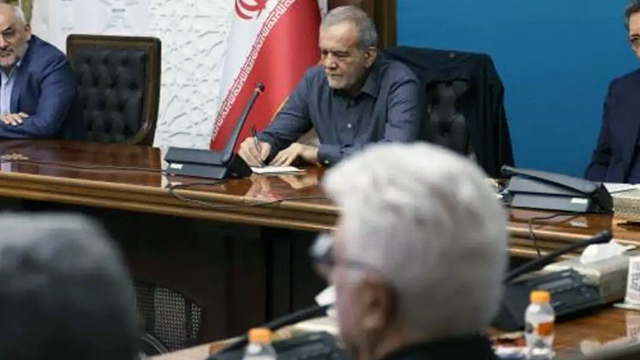
In a hall usually reserved for sweeping economic decisions, a different voice broke through this time: the voice of a factory owner whose production lines sit dark because of power outages, even as transit fee invoices continue to pile up on his desk. Mr. Jahanbakhsh Shokri, Chairman of the Board of Shokri Industrial Group (which includes Jahan Foulad Gharb, Jahan Sanat Kermanshah, Bisotoun Steel Smelting, and Sima Foulad jahan) and head of the Kermanshah Chamber of Industries, Mines and Trade, voiced this contradiction directly to the President during a four-hour meeting: factories that are shut down and consuming no power are still being billed by the electricity company.
The Roots of an Energy Crisis
What surfaced in this meeting was not a passing grievance but a reflection of a structural challenge in Iran’s industrial economy. A chronic energy shortage, one that has gripped the country’s industries for years, has now crystallized into three specific grievances: transit fees charged even to idle facilities, financial and sometimes physical damages caused by sudden blackouts, and a multi-tiered tariff system that leaves energy-intensive industries like steel at a disadvantage.
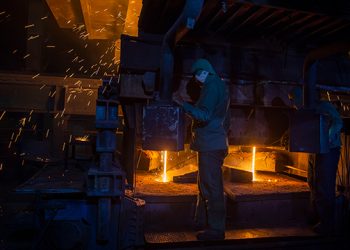
According to Mr. Shokri, the classification of industries into “high-consumption” and “low-consumption” categories is, in many cases, economically illogical. Industries such as steel are inherently energy-intensive, and imposing heavier tariffs on them, at a time when many of these units are already operating at a loss, only deepens the crisis.
The Domino Effect: From the Factory Floor to the Supply Chain
The consequences of this situation do not stop at the factory walls. When an enterprise as large as Shokri Industrial Group struggles with imbalanced energy costs, that strain gradually ripples through national supply chains, export competitiveness, and ultimately regional employment. Mr. Seyed Abdolvahhab Sahelabadi, Chairman of the Board of the Iran Chamber of Industries, Mines and Trade, described the meeting as a direct result of industrialists’ demands raised on National Industry Day, a sign that the private sector is no longer willing to wait for gradual reform.
A Path to Reform, or Another Broken Promise?
Following the discussion, an agreement was reached to form a joint committee comprising the Iran Chamber of Industries, Mines and Trade, the Ministry of Energy, and the Ministry of Industry, Mines and Trade, a body tasked with determining, through expert review, who bears responsibility for blackout-related damages. Alongside this, the agenda also included reviewing tariff calculation methods, eliminating imposed costs, cracking down on unauthorized power usage, revisiting green electricity purchase policy, and installing smart meters. Still, the central question remains: will this four-hour meeting mark the beginning of real change in the country’s industrial energy policy, or simply another chapter in a long history of promises heard but never fulfilled?