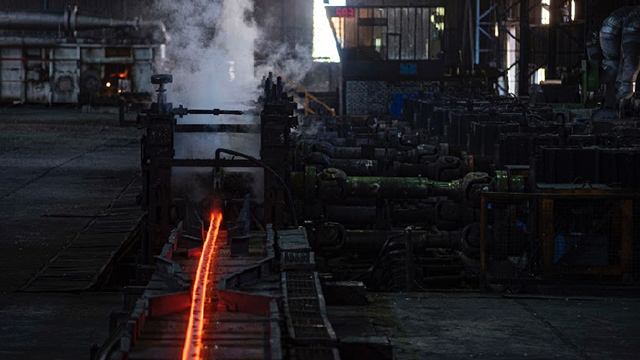
In the furnaces of Khuzestan, in southwestern Iran, machinery that once produced four million tons of steel a year still bears the scars of recent attacks. But amid the smoke and metal, something else is unfolding: a political decision that could determine the fate of one of Iran’s industrial pillars. That decision came in a single sentence from Masoud Pezeshkian, Iran’s president: even amid shortages, industrial power supply must not be cut. To outside observers, this might read as a mere technical remark on grid management. But within Iran’s economy, the statement functions as an unofficial declaration of national priority in the postwar period.
A Four-Decade Legacy Under Test
Khuzestan Steel is the product of more than four decades of investment, infrastructure development, and specialized workforce training — a complex that, owing to its unmatched geographic position, has become one of the key links in the country’s steel value chain. The damage inflicted on the facility in recent attacks was not merely an industrial incident; it struck at a portion of Iran’s productive and economic capacity itself.
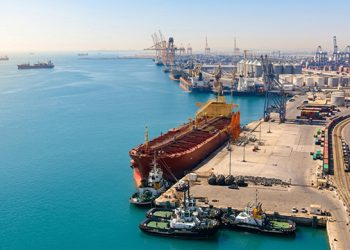
The company’s significance extends well beyond Khuzestan’s borders. It supplies raw materials to a number of downstream industries, including the National Iranian Steel Industrial Group, Oxin Steel, and rolling mill operations such as Ahvaz and Kavian. Direct access to open waters and rail, road, and maritime transport networks has also made the region one of the country’s lowest-cost steel export hubs — export costs from this location run around $2 per ton, compared with $15 to $20 per ton from many facilities in Iran’s central plateau.
A Domino of Decisions, from the Presidency to the Ministry of Energy
What turns this into a national policy test rather than a local crisis is the alignment across several tiers of decision-makers. Masoud Pezeshkian, the president, has called production the pillar of the country’s economic authority. Seyed Mohammad Atabak, the minister of industry, mining, and trade, has described production as a “national discourse” that currency, trade, and financial policies must serve. Abbas Aliabadi, the minister of energy, during a visit to Khuzestan, announced reduced blackout schedules and special support for production units.
This alignment continues at the executive level. Mohammad Jafar Ghaempanah, the president’s executive deputy, addressed the precise assessment of damages and the necessity of government support for reconstruction at a recent meeting. Meanwhile, Amin Ebrahimi, CEO of Khuzestan Steel, announced that reconstruction operations began immediately, relying on domestic specialists, and stressed that the production cycle was never allowed to stop.
Why This Moment Matters
What is unfolding in Khuzestan now is not simply the reopening of a factory. If the complex returns fully to production, the effects will ripple outward — to downstream industries, non-oil export revenues, and ultimately to the broader picture of Iran’s economic capacity in the postwar era. In that sense, ensuring stable power for a steel complex has become a test of whether political promises to support production will translate into reality.