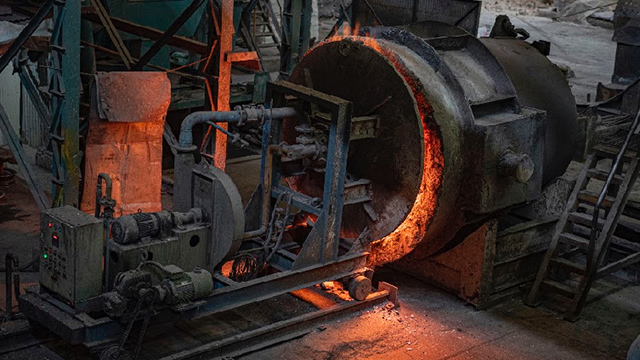
As power and gas shortages spread through melting furnaces, industry leaders warn that years of neglected energy policy could jeopardize Iran’s standing among the world’s largest steel producers.
In the sprawling steel plants of western and central Iran, the production rhythm has settled into a familiar pattern of interruption. Furnaces that should run without pause now sit idle for hours, waiting for electricity that cuts out just as natural gas returns, and vice versa. According to industry officials, this is a crisis that repeats season after season, year after year.
Bahram Sobhani, chairman of the Iranian Steel Producers Association, has put a figure on the damage: nearly $18 billion in lost profit across the steel value chain over the past five years, a direct consequence of an energy grid unable to reliably supply one of the country’s most strategic industries.
An Industry Besieged from Two Sides
The core paradox of Iran’s steel crisis is structural. Electricity and natural gas, the two lifelines of steel production, are rarely available at the same time. Whenever gas flows abundantly, the power grid falters; whenever electricity is stable, gas becomes scarce. According to Sobhani, the result is a production system that always operates at only a fraction of its true capacity. That capacity is considerable. During peak production months, particularly early autumn and spring in the Iranian calendar, the industry could theoretically produce more than 40 million tons of steel annually. Domestic consumption stands at roughly 20 million tons, leaving another 20 million tons of export potential. But energy constraints alone wipe out nearly $10 billion of that potential export revenue.
The consequences extend beyond the plants themselves. The shutdown of strategic steel units is not a localized effect; it ripples outward, threatening the automotive and home appliance industries, which depend heavily on the steel supply chain.
The Economics of an Unstable Grid
Unlike petrochemical companies, for which electricity makes up only a small share of costs, steelmakers face a very different reality: electricity accounts for about 30% of production costs. This makes the industry highly vulnerable to fluctuations on Iran’s energy exchange, where, according to Sobhani, electricity prices are set without adequate oversight. He warned that even small price increases on this exchange can jeopardize profitability and the continuity of production.
He has proposed a solution: allocating electricity quotas at controlled prices for heavy industries, steel foremost among them, on designated days, so the industry is spared destructive competition with the petrochemical sector over limited power resources.
A Country with Untapped Capacity
Despite this turmoil, Iran’s raw capacity remains impressive. The country currently produces about 32 million tons of steel annually, ranking it tenth among the world’s largest producers. Sobhani says that if the disruption caused by recent attacks on certain strategic steel units is set aside, actual production potential would be far higher, enough, in his view, to put sixth place in the world within reach.
This ambition is also enshrined in the country’s 20-year national vision document, which envisions a national capacity of 55 million tons. Yet actual production has never exceeded the 30-million-ton mark, a gap that Sobhani attributes mainly to instability in fuel and energy supply, not any shortfall in industrial capacity.
The economic weight of this industry is not negligible. Steel accounts for 5.1% of Iran’s GDP and is directly and indirectly responsible for eight percent of the country’s employment. Last year alone, the industry supplied about 15% of the country’s non-oil exports, a scarce and vital source of foreign currency revenue. Even so, profitability has collapsed.
Companies’ profit margins in this sector have fallen from 33% five years ago to just 6% today, even as companies have spent part of their remaining profits on capital development to withstand future shocks that energy instability makes harder to plan for.
When Energy Costs Compound
The math behind this crisis is unforgiving. At the most efficient companies, energy costs make up about 25% of production costs; at downstream units lacking a full supply chain, that figure exceeds 30%. By Sobhani’s calculation, every 10% increase in energy prices adds roughly three percent directly to the final cost of steel products.
The tariff structure compounds the problem. He says the base electricity rate is only part of the story. Once regulatory enforcement gaps, power-plant fuel costs, Article 16 energy differentials, and transit fees are stacked together, the final price paid by producers can exceed the base rate by 40% or more, an accumulated burden pushing Iranian steel toward uncompetitive prices in global markets.
Of the roughly 77,000 megawatts of electricity the country generates, steelmakers receive only about 5,300 megawatts during peak demand periods. But Sobhani stresses that the cost of shutting down a steel unit goes beyond lost production hours; the energy and expense involved in shutting down and restarting furnaces can alone inflict severe financial damage.
His conclusion was both a warning and an appeal: without an energy policy grounded in the real needs of this industry and its place in the broader value chain, Iran risks losing the global standing its steel sector has spent decades striving to achieve.