Green Energy vs. Iran’s Industries: From Crisis to Solution
Interview with Reza Mohebi Taleghani, Business Development Expert
With the increasing environmental problems and climate change, the rise in air pollution, and the warming of the Earth, the application of green energy has expanded. In developed countries, strict restrictions have been imposed on the use of fossil fuels, and it is predicted that in the near future, goods produced based on fossil fuels will not be licensed for sale. Currently, the migration of industries to green energy regions is expanding worldwide, and sunlight is one of the most important sources of green energy. To learn about the current conditions of solar energy application and its future prospects in Iran, we had a conversation with Reza Mohebi Taleghani, Head of Development and Communications at Haft Almas Industrial Group and Steel Alborz, who is one of the experienced experts and authorities in the field of sustainable business development in Iranian industries. The result of our short chat with him led us to the conclusion that producing electricity from the sun and establishing solar power plants in Iranian industries is not a distant goal, and with planning and capital management, the path to bringing solar energy to Iranian industries can be paved.
Mohebi Taleghani initially referred to the energy imbalance crisis in the country and said: ‘Currently, we are facing various imbalances. One of the determining imbalances is the energy imbalance, and in these circumstances, we must move towards the production of clean energy. Green energy in Iran has a relative advantage compared to many parts of the world. However, our industries currently lack the ability to enter this sector due to the lack of access to important international financial providers, which provide investment opportunities at reasonable costs. In addition, obstacles such as the lack of low-cost communication with banks and monetary resources in the world exacerbate the problem of attracting capital. It must be said that providing resources is not a simple task, and given the current economic conditions of our industries, which are living on the edge of survival, achieving this goal is a challenging task.
Despite all these problems, is there a solution to get out of this situation?
Yes, there is a way out, and one of the main ways goes back to the expansion of renewable energies. For example, the expansion of solar energy application in a developed country like Germany has been based on tax credits. In fact, the expansion of solar energy in the last decade has been based on a type of tax credit that the German government has given to industries. This event is not a cost but a type of indirect government investment that is carried out by private sector contractors and, in fact, results in the least waste and loss of money and capital. The method works in such a way that, in principle, the private sector works for itself, and the energy problem is solved in the cheapest possible way. It is the government that invests, but in a very limited period, the capital and its profit return to the government.
Mohebi Taleghani continued: ‘The government allocates an amount as a tax credit to the industrial unit. The industrial unit itself, under the supervision of the government, builds the solar power plant with this tax credit. The tax exemption is not permanent, and, for example, within two or three years, after the solar power plant is built, the tax exemption is removed. From this point on, the industrial unit produces its own required energy, and as a result, its production and consequently its profit increase, and it pays more taxes to the government. In this way, the government recovers the amount it invested in taxes within a few years.
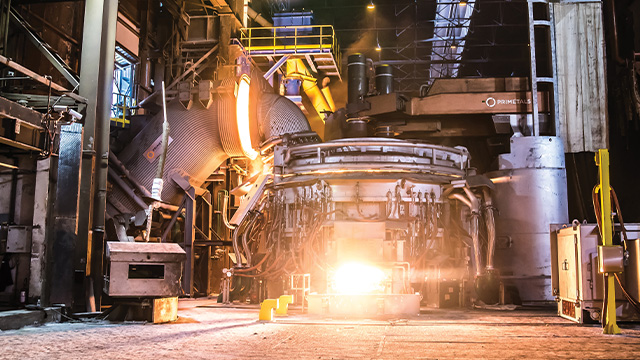
Engineer Mohebi Taleghani described the current state of industry in Iran as follows: ‘The current estimate is that due to gas and electricity shortages, our industries are closed for about four months of the year due to problems caused by energy imbalance. If we look at this problem from the government’s perspective, various negative consequences can be observed. Energy imbalance causes unemployment and insecurity of human resources. It creates the problem of reduced production and foreign exchange shortage. It creates the problem of reduced GDP (Gross Domestic Product). In addition to all of this, it also causes a lack of tax revenue. That is, government revenues are also affected. However, if the government invests in a short-term program called tax credit and allocates this credit to the establishment of solar power plants by the industrial unit itself, it will only miss a hypothetical tax revenue for a short period. It should be noted that the government is not going to pay money, and this tax credit is taken from the industrial unit itself.
Mohebi Taleghani explained regarding the financial coverage resulting from tax credits for the construction of solar power plants: ‘It may not be enough for a one-year tax credit to build a power plant, and in this case, the industrial unit itself can provide fifty percent or seventy percent of the budget for the establishment of the solar power plant to cover this imbalance in the coming years. This is not something strange. An industrial institution, by establishing a solar power plant, first, becomes self-sufficient, and secondly, it no longer remains idle for those four months of the year that it was unemployed due to gas and electricity shortages. Therefore, in practice, production increases, and this process leads to an increase in government tax revenue as well. That is, the government’s spent budget, which was granted in the form of tax exemption, is simply returned to the government’s fund in a very short period of time. In the long run, both the industry owner and the government benefit.
He added, stating that it is not necessary to build solar power plants on a large scale: ‘The establishment of large solar power plants faces the very important problem of very extensive investment, and usually, there is no volunteer other than the government itself to do it, so it remains idle and is not done. But the more important issue is the need for large power plants to develop the electricity transmission network. That is, if we have a 20-megawatt or 10-megawatt power plant somewhere and want to compensate for the shortage and imbalance, we have to put the entire electricity transmission network under load. Such an amount of energy cannot be distributed without waste and distribution loss. In addition, if we want to put more load on the existing network, in high-consumption areas such as Tehran and similar places, the network will be disrupted. The country’s electricity distribution network is currently unable to expand. Therefore, we have to move towards making industries self-sufficient. That is, industries should have their own power plants next to themselves and consume electricity there. Of course, if possible, they can also feed their generated electricity into the grid. But if it was not possible and there was a problem, it is possible that the electricity from these power plants will only be consumed in the industries and will not enter the grid at all and will not increase the grid load.
Mohebi Taleghani continued: ‘With this approach, in addition to not having an extra load on the electricity distribution network, a large part of the network load is also lightened, which allows the power transmission network to perform its function better. In this way, in the short term, that is, within two to three years, the issue of energy imbalance can be covered, at least in industries. As a result, both the government’s problem is solved and the production rate increases. Another positive point is that we also have laws in this regard. That is, there is no need for new legislation. This issue is stated in paragraph “t” of the Knowledge-Based Leap Law, and it only needs to be re-emphasized so that the obstacles to the implementation of this law for the establishment of solar power plants are removed. The very important point is that in the “Knowledge-Based Leap Law,” the formation of CVCs (corporate venture capital) is included. Incidentally, this law is very progressive and modern, and great congratulations should be given to the legislative body and the government for including this issue in the law. However, the implementation of this law is subject to obstacles that make its implementation very slow. The law itself is very good, but in practice, we do not see proper implementation of it. If we can facilitate this process so that all industries can quickly set up corporate venture capital funds, we have expanded a regional knowledge-based ecosystem in economic areas. This issue both develops the industry and develops science in the industry. That is, knowledge production increases. Many knowledge-based accelerator companies that can create ecosystems dependent on their industries and the private sector, these companies usually spend their costs in areas where their defined and determined business is, and in fact, a specific, high-yield, and guaranteed business. Therefore, we see less investment waste in them. This targeted ecosystem development actually expands.
With thanks to dear Reza Mohebi Taleghani, in another opportunity, we will reflect his views on venture capital and the knowledge-based ecosystem in detail in the publication “Selected World of Steel”. In fact, the scope of green energy is very wide and encompasses various fields that must be addressed one by one.
Steel World Review