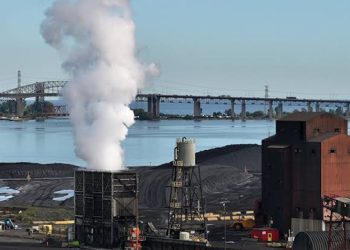
Iran, as one of the countries rich in hydrocarbon resources, has always based its economic and energy activities on oil and gas. The provided images illustrate the significant share of oil and gas in supplying the country’s energy consumption over the past several decades. While this dependency has offered short-term economic benefits and easy access to domestic resources, it also brings long-term strategic challenges.
According to the first chart, the share of oil and gas in Iran’s energy consumption has remained above 97% in recent years, with 69.5% specifically attributed to natural gas. This data indicates the country’s excessive reliance on fossil resources, and in practice, renewable sources such as wind, solar, and biofuels have a very negligible share in the country’s energy supply. Such an energy composition not only leads to a reduction in the diversity of resources but also increases the country’s economic and environmental vulnerability.
The second chart addresses the trend of energy consumption growth in Iran. In this chart, the upward trend of gas and oil consumption is clearly visible, while the share of renewable sources such as wind and solar energy has remained almost constant or very small. From the 1960s to the present, gas consumption has increased sharply and is almost recognized as the main substitute for oil in the energy consumption basket. However, this change does not mean a reduction in dependence on hydrocarbon resources, but only the type of dominant resource has changed.
 One of the main reasons for this dependence is the country’s economic structure and industrial infrastructure, which are largely based on fossil fuels. In this context, insufficient policymaking for the development of renewable energies and related technologies has also played a significant role in the current situation. This is while many countries, by formulating sustainable policies, have increased the share of new energies in their energy basket and reduced their dependence on fossil fuels.
The consequences of Iran’s dependence on oil and gas are evident in both economic and environmental domains. Economically, fluctuations in oil and gas prices in global markets can have direct impacts on national revenues. On the other hand, this concentration on fossil resources leads to increased greenhouse gas emissions and negative environmental consequences such as climate change and air pollution.
To reduce this dependence, it is essential to increase investment in renewable energies such as solar, wind, and biofuels. Iran, with its high potential for solar and wind energy, can play a significant role in this area. Also, supportive policies such as providing subsidies for clean energy production and facilitating the development processes of related technologies can help change the current situation.
Finally, the transition towards a sustainable energy mix requires a comprehensive approach in policymaking, investment in innovative technologies, and private sector participation. Only in this way can Iran achieve true independence in the energy sector and move towards sustainable development.
Steel World Review