Press conference of the Iranian Steel Producers Association; reviewing the challenges of energy, water, and exports in the steel industry
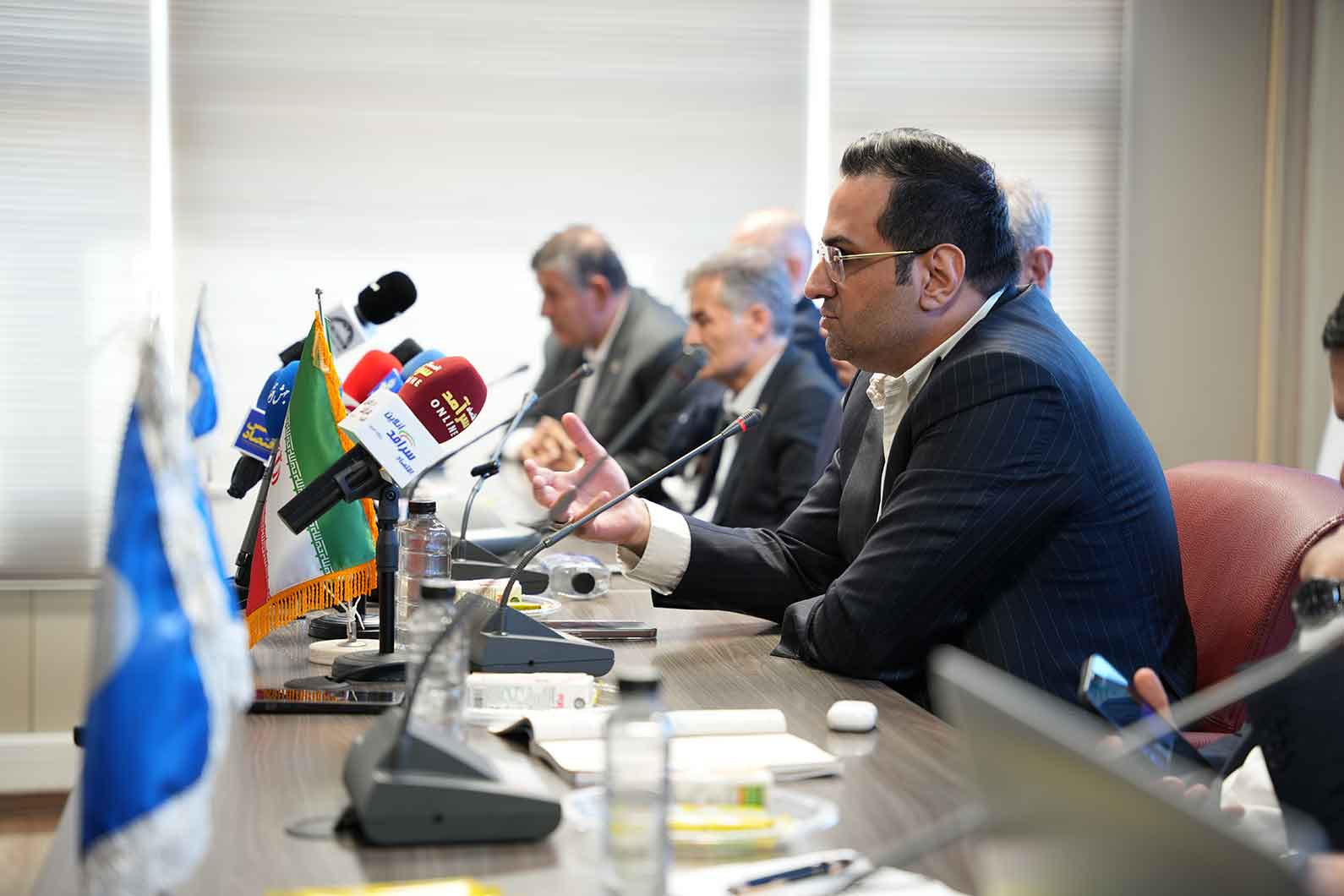
🔹The press conference of the board members of the Iranian Steel Producers Association was held on August 17, 2025, in the Chamber of Commerce Hall, with the presence of a group of journalists from specialized media.
At the beginning of this meeting, Mr. Yaghubi presented a report on production statistics, energy consumption, and the volume of steel exports in the first four months of 2025 compared to the same period last year. Then, Dr. Sobhani explained the most important problems and challenges of the country’s iron and steel chain.
In the Q&A session, most of the journalists’ questions revolved around the impact of the energy imbalance on the steel industry, water transfer from the Persian Gulf to the central plateau, and the limitations of power supply to steel units. Journalists emphasized that despite the construction of dedicated power plants by large steel units, in critical conditions the electricity produced by these plants is taken out of the factories’ access. According to the announced statistics, the steel industry consumes about 5,300 to 5,400 megawatts of electricity in total, of which nearly 4,000 megawatts are supplied by the units’ internal power plants.
The issue of water consumption in the steel industry was another topic of the meeting. Dr. Dashtiane, in response to the criticisms, pointed out the comparison between water consumption in agriculture and the steel industry, saying: to produce one kilogram of watermelon, about 240 liters of water is consumed, while for producing one ton of steel, water consumption is very negligible due to continuous recycling in a closed cycle.
Later, the challenge of mandatory pricing and determining the base rate of steel with a 70,000 Toman dollar was criticized. Speakers emphasized that this policy has created additional pressure on producers and widened the gap between real prices and the market.
In addition, regarding exports, it was announced that currently about 65 percent of steel exports are carried out by business cards and traders, while the share of factories has decreased to 30 to 35 percent—opposite to previous years. The difference between the free-market dollar rate and the NIMA dollar was described as the cause of rent-seeking and non-transparent exports.
At the end of the meeting, as one of the key solutions, emphasis was placed on unifying the exchange rate and realigning the currency rate; an action that, according to steel industry activists, can prevent rent-seeking, strengthen real exports by production units, and increase foreign exchange earnings for the country.