As decarbonization pressures mount, a consortium in southern France is racing to prove that steelmaking can shed its carbon backbone entirely
FOS-SUR-MER, France Along the industrial flats where the Mediterranean meets the Rhône delta, a wager is taking physical shape that could help determine whether Europe’s steel industry survives the transition to a carbon-constrained economy or is slowly priced out of it.
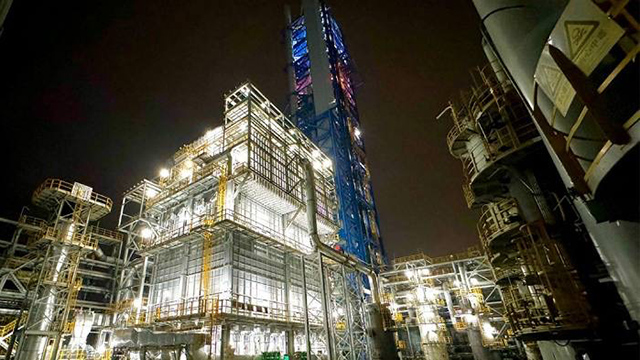
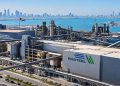
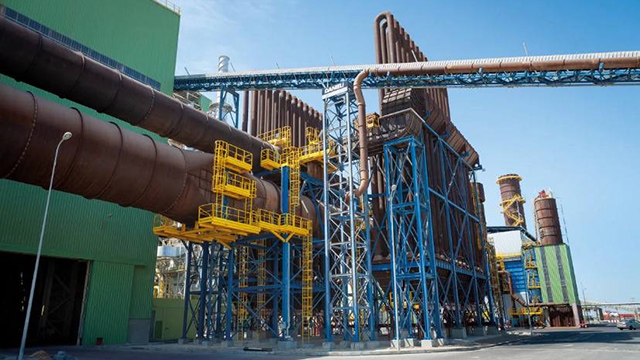
The French company GravitHy has commissioned the Italian engineering firm Danieli to build a direct reduction plant here capable of producing two million tonnes annually of hot briquetted iron a refined, compacted form of iron ore that serves as the raw feedstock for electric steelmaking. What distinguishes this plant from the blast furnaces that have defined steel production for two centuries is its fuel: hydrogen, not coking coal, will do the chemical work of stripping oxygen from iron ore.
A Technology Bet Years in the Making
The stakes behind this announcement extend well past the port of Fos-sur-Mer. Steelmaking accounts for roughly seven to nine percent of global carbon emissions, and the conventional blast-furnace route which relies on coke, a carbon-intensive fuel derived from coal remains stubbornly difficult to displace at industrial scale. Hydrogen-based direct reduction has long been discussed as one of the few credible paths to decarbonizing so-called hard-to-abate industries, but the technology has struggled to move from pilot projects to plants capable of feeding a modern electric-arc furnace.
GravitHy’s plant, using Danieli’s Energiron Zero Reformer technology developed with Tenova, aims to close that gap. The facility will generate its own low-carbon hydrogen on-site and use an electric process heater rather than fossil fuel combustion a detail industry engineers regard as significant, since heating the reducing gas has historically been one of the harder emissions sources to eliminate in direct-reduction plants. The output iron with a metallization grade of up to 96 percent and a carbon content of one percent is calibrated precisely for the requirements of electric steel smelting downstream.
The Price of Being First
None of this comes cheaply. The total investment in the GravitHy project exceeds three billion euros, a figure that underscores both the capital intensity of reinventing heavy industry and the scale of subsidy and financing support that green steel projects across Europe have required to reach construction. Danieli has now received the formal notice to proceed, beginning basic engineering work that spans not just the reduction plant itself but the water treatment systems and material handling infrastructure needed to run it.
Building a Cluster, Not Just a Plant
Perhaps the more telling detail is geography. GravitHy’s facility will rise beside Marcegaglia’s Mistral minimill, an electric-technology project for producing hot-rolled coils meaning Fos-sur-Mer is emerging not as a single green-steel experiment but as an integrated industrial cluster, where hydrogen-reduced iron can be fed directly into electric steelmaking without long supply chains. Danieli’s involvement in both projects reinforces that logic, positioning the Italian engineering group as a central architect of Europe’s green steel ambitions on this stretch of coastline.
A 2030 Deadline, and a Broader Test
With commissioning targeted for the end of 2030, the project sits inside a narrowing window. European steelmakers face tightening carbon border rules and shifting demand from automakers and manufacturers seeking low-carbon materials. Whether GravitHy’s hydrogen route proves commercially replicable rather than a heavily subsidized outlier will likely shape how aggressively the rest of the industry follows onto the same path.