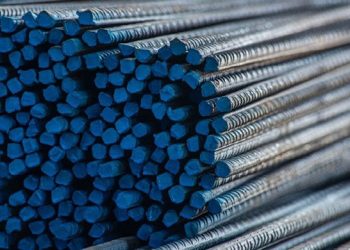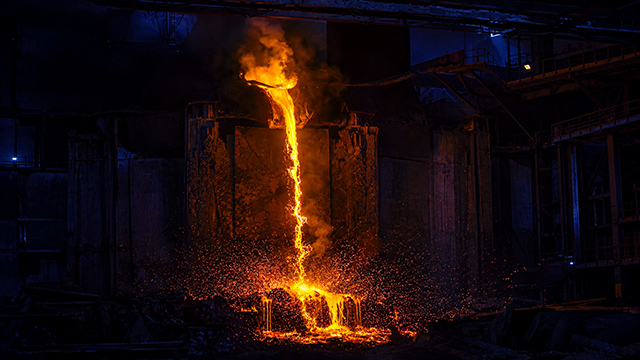
A review by Steel World Review of Iran’s steel export markets shows that Iranian steel exports continue to benefit from price competitiveness, geographic location and access to regional markets. However, rising freight costs, energy restrictions, payment transfer difficulties and the stronger presence of competitors have made conditions more challenging for Iranian exporters.
Iranian steel still has buyers. Iraq, Afghanistan, Pakistan, Oman and Central Asian markets remain among the most important potential and active markets for Iranian steel products.
However, today’s export market is different from what it was several years ago.
In the past, geographic proximity and competitive pricing could make a large part of the sales process easier for Iranian producers. Today, foreign buyers consider not only price, but also delivery time, freight costs, route security, payment methods and supply continuity.
As a result, Iranian steel exports in 2026 are more dependent than ever on a combination of factors beyond the production line.
Iranian Export Billet Prices Reach $405–410 per Ton
One of the most important indicators of the current market situation is the decline in Iranian export billet prices.
According to the latest market assessments in the second half of September 2026, Iranian export billet offers were in the range of $405–410 per ton FOB.
A shipment of around 10,000 tons of billet was also traded at approximately $406 per ton FOB.
For comparison, in early September, Iranian export billet prices were in the range of $410–415 per ton FOB, and a transaction of around 10,000 tons was also reported at $413 per ton FOB.
This means that the market has declined by several more dollars in just about two weeks.
Iranian export slab prices were also in the approximate range of $410–415 per ton FOB.
These figures show that Iranian producers still have to compete on price in order to maintain their export markets.
But the important question is to what extent a lower FOB price can offset higher logistics, insurance and money-transfer costs.
The Decline in the Rial and Its Impact on Iranian Steel Exports
One of the reasons behind selling pressure in the export market is the depreciation of the rial.
In recent weeks, the rial lost around 15 percent of its value against the dollar over a short period. On the one hand, this can make exports more attractive for Iranian producers, as export revenues are received in foreign currency.
On the other hand, depreciation of the national currency increases the cost of procuring equipment, spare parts, consumables and some imported raw materials.
As a result, the relationship between rial depreciation and Iranian steel exports is not necessarily straightforward.
A producer may appear to have greater capacity to lower its dollar-denominated prices, while at the same time facing higher domestic costs and increased replacement costs for materials and equipment.
During the same period, hot-rolled coil prices in Iran’s domestic market reached approximately $537–589 per ton EXW, an increase largely linked to the depreciation of the rial and higher replacement costs rather than a significant increase in actual demand.
Iraq: Still One of the Most Important Markets for Iranian Steel Exports
The Iraqi steel market remains one of the most important destinations for Iranian steel products.
The short distance, availability of land transportation, construction and infrastructure projects, and the long history of trade between the two countries have given Iraq a special position in Iranian steel exports.
In early September, Iranian rebar was traded in the Iraqi market at approximately $550 per ton delivered.
In the second half of the month, Iranian hot-rolled coil for shipment via Shalamcheh was offered at around $580–590 per ton FCA.
However, some of these offers have not yet resulted in confirmed transactions.
This shows that even in a market such as Iraq, where Iran has a significant geographic advantage, price is no longer the only determining factor.
Iraqi buyers are now also comparing offers from Turkey, China and other regional suppliers.
Therefore, maintaining Iran’s share of the Iraqi steel market increasingly depends on consistent delivery, an appropriate final price and an efficient distribution network.
Afghanistan: An Important Market Where Competitors Have Entered
Afghanistan has for years been one of the natural markets for Iranian exports of goods and steel products.
However, recent figures contain an important warning for Iranian exporters.
According to remarks by the head of the Iran-Afghanistan Joint Chamber of Commerce, Iran’s exports to Afghanistan have declined by at least 25 percent in recent months.
At the same time, Uzbekistan’s exports to Afghanistan have increased by around 42 percent.
These two figures are significant when viewed together.
The Afghan market has not disappeared. Part of the demand previously supplied by Iran is shifting toward other suppliers.
Iranian steel still has buyers. Iraq, Afghanistan, Pakistan, Oman and Central Asian markets remain among the most important potential and active markets for Iranian steel products.
However, today’s export market is different from what it was several years ago.
In the past, geographic proximity and competitive pricing could make a large part of the sales process easier for Iranian producers. Today, foreign buyers consider not only price, but also delivery time, freight costs, route security, payment methods and supply continuity.
As a result, Iranian steel exports in 2026 are more dependent than ever on a combination of factors beyond the production line.
Iranian Export Billet Prices Reach $405–410 per Ton
One of the most important indicators of the current market situation is the decline in Iranian export billet prices.
According to the latest market assessments in the second half of September 2026, Iranian export billet offers were in the range of $405–410 per ton FOB.
A shipment of around 10,000 tons of billet was also traded at approximately $406 per ton FOB.
For comparison, in early September, Iranian export billet prices were in the range of $410–415 per ton FOB, and a transaction of around 10,000 tons was also reported at $413 per ton FOB.
This means that the market has declined by several more dollars in just about two weeks.
Iranian export slab prices were also in the approximate range of $410–415 per ton FOB.
These figures show that Iranian producers still have to compete on price in order to maintain their export markets.
But the important question is to what extent a lower FOB price can offset higher logistics, insurance and money-transfer costs.
The Decline in the Rial and Its Impact on Iranian Steel Exports
One of the reasons behind selling pressure in the export market is the depreciation of the rial.
In recent weeks, the rial lost around 15 percent of its value against the dollar over a short period. On the one hand, this can make exports more attractive for Iranian producers, as export revenues are received in foreign currency.
On the other hand, depreciation of the national currency increases the cost of procuring equipment, spare parts, consumables and some imported raw materials.
As a result, the relationship between rial depreciation and Iranian steel exports is not necessarily straightforward.
A producer may appear to have greater capacity to lower its dollar-denominated prices, while at the same time facing higher domestic costs and increased replacement costs for materials and equipment.
During the same period, hot-rolled coil prices in Iran’s domestic market reached approximately $537–589 per ton EXW, an increase largely linked to the depreciation of the rial and higher replacement costs rather than a significant increase in actual demand.
Iraq: Still One of the Most Important Markets for Iranian Steel Exports
The Iraqi steel market remains one of the most important destinations for Iranian steel products.
The short distance, availability of land transportation, construction and infrastructure projects, and the long history of trade between the two countries have given Iraq a special position in Iranian steel exports.
In early September, Iranian rebar was traded in the Iraqi market at approximately $550 per ton delivered.
In the second half of the month, Iranian hot-rolled coil for shipment via Shalamcheh was offered at around $580–590 per ton FCA.
However, some of these offers have not yet resulted in confirmed transactions.
This shows that even in a market such as Iraq, where Iran has a significant geographic advantage, price is no longer the only determining factor.
Iraqi buyers are now also comparing offers from Turkey, China and other regional suppliers.
Therefore, maintaining Iran’s share of the Iraqi steel market increasingly depends on consistent delivery, an appropriate final price and an efficient distribution network.
Afghanistan: An Important Market Where Competitors Have Entered
Afghanistan has for years been one of the natural markets for Iranian exports of goods and steel products.
However, recent figures contain an important warning for Iranian exporters.
According to remarks by the head of the Iran-Afghanistan Joint Chamber of Commerce, Iran’s exports to Afghanistan have declined by at least 25 percent in recent months.
At the same time, Uzbekistan’s exports to Afghanistan have increased by around 42 percent.
These two figures are significant when viewed together.
The Afghan market has not disappeared. Part of the demand previously supplied by Iran is shifting toward other suppliers.
At the same time, Iran still holds a very important position in Afghanistan’s trade, and in some statistics, more than 31 percent of Afghanistan’s imports were supplied by Iran.
Therefore, Afghanistan remains a strategic market for Iranian exports.
However, recent months have shown that geographic proximity alone is not enough to maintain market share.
If Iranian supply declines, regional competitors quickly fill the gap.
Iranian Steel Exports to Pakistan: Inquiries Exist, but Fewer Transactions
Pakistan has also once again become a market of interest for Iranian steel exporters in recent months.
In the Pakistani market, inquiries have been reported for Iranian hot-rolled coil at approximately $580 per ton EXW.
However, the important point is that some of these inquiries have not yet resulted in confirmed transactions.
This difference between a “price inquiry” and an “actual transaction” is highly important when analyzing Iran’s steel export market.
The market may be active in terms of demand, but transportation, payment, border-crossing or final-price issues may prevent a contract from being concluded.
In recent weeks, there have also been reports of truck delays and longer transit times along some trade routes between Iran, Pakistan, Afghanistan and other neighboring countries.
For a commodity such as steel, lengthy transportation delays can completely eliminate part of the initial price advantage.
Oman: An Increasingly Important Export Market and Logistics Route for Iran
Oman is also gaining greater importance in Iran’s regional trade.
In early September, a transaction for Iranian billet destined for Oman was reported at around $440 per ton CFR.
This figure is noteworthy when compared with Iran’s FOB price.
If billet is traded at around $410–415 per ton FOB and the delivered price in Oman is close to $440 per ton, it shows how significant transportation and logistics costs can be in the final price.
Under current conditions, Oman is not only a consumer market
The country’s port position could make it an increasingly important route for regional trade, transshipment and access to other Gulf markets.
For Iranian exporters, this capacity can represent an opportunity. However, every additional link in the transportation chain means additional cost and time.
Freight Costs: The Hidden Competitor for Iranian Steel
One issue that is often overlooked in steel price analysis is the actual cost of transportation.
In the regional market, freight rates for some steel shipments on the Caspian Sea route have reached around $55–60 per ton.
This figure is highly significant.
Suppose two producers differ by only $15 in their FOB prices. If one of them has freight costs that are $30 or $40 higher, the initial price advantage effectively disappears.
That is why an international buyer does not compare FOB prices alone.
Ultimately, the buyer looks at the delivered price of steel at the destination.
From Steel World Review’s perspective, one of the most important changes in Iran’s export market is precisely this: logistics is no longer a secondary cost; it has become part of price competition.
Energy Crisis and Its Impact on Iran’s Steel Market
Alongside export challenges, Iranian steel producers continue to face energy-related problems.
Electricity restrictions in summer and gas restrictions in winter have become one of the most important challenges facing the steel industry in recent years.
According to remarks by the head of the Iranian Steel Producers Association, electricity and gas restrictions over the past five years have imposed approximately $18 billion in lost economic benefits on the country’s steel value chain.
This figure does not only represent reduced production.
For the export market, production continuity is extremely important.
A foreign buyer needs to be confident that its order will be produced, loaded and shipped on schedule.
If a producer is concerned about electricity supply in summer and gas restrictions in winter, this risk will ultimately be incorporated into the export contract.
Therefore, today’s energy imbalance is no longer only an internal problem for Iran’s steel industry; it has become a direct issue in export competition.
Repatriation of Export Proceeds: Another Challenge for Steelmakers
Steel exporters face currency regulations in addition to production and logistics challenges.
Under existing regulations, exporters of steel products must settle 100 percent of the value stated in their export declaration through methods approved by the Central Bank.
Under normal conditions, this might simply be a financial process.
However, for Iran, which does not have full access to the international banking network, the way payment is received from the customer and foreign currency is repatriated can directly affect the transaction price.
As a result, an Iranian steel exporter has to manage several risks simultaneously:
Therefore, Afghanistan remains a strategic market for Iranian exports.
However, recent months have shown that geographic proximity alone is not enough to maintain market share.
If Iranian supply declines, regional competitors quickly fill the gap.
Iranian Steel Exports to Pakistan: Inquiries Exist, but Fewer Transactions
Pakistan has also once again become a market of interest for Iranian steel exporters in recent months.
In the Pakistani market, inquiries have been reported for Iranian hot-rolled coil at approximately $580 per ton EXW.
However, the important point is that some of these inquiries have not yet resulted in confirmed transactions.
This difference between a “price inquiry” and an “actual transaction” is highly important when analyzing Iran’s steel export market.
The market may be active in terms of demand, but transportation, payment, border-crossing or final-price issues may prevent a contract from being concluded.
In recent weeks, there have also been reports of truck delays and longer transit times along some trade routes between Iran, Pakistan, Afghanistan and other neighboring countries.
For a commodity such as steel, lengthy transportation delays can completely eliminate part of the initial price advantage.
Oman: An Increasingly Important Export Market and Logistics Route for Iran
Oman is also gaining greater importance in Iran’s regional trade.
In early September, a transaction for Iranian billet destined for Oman was reported at around $440 per ton CFR.
This figure is noteworthy when compared with Iran’s FOB price.
If billet is traded at around $410–415 per ton FOB and the delivered price in Oman is close to $440 per ton, it shows how significant transportation and logistics costs can be in the final price.
Under current conditions, Oman is not only a consumer market
The country’s port position could make it an increasingly important route for regional trade, transshipment and access to other Gulf markets.
For Iranian exporters, this capacity can represent an opportunity. However, every additional link in the transportation chain means additional cost and time.
Freight Costs: The Hidden Competitor for Iranian Steel
One issue that is often overlooked in steel price analysis is the actual cost of transportation.
In the regional market, freight rates for some steel shipments on the Caspian Sea route have reached around $55–60 per ton.
This figure is highly significant.
Suppose two producers differ by only $15 in their FOB prices. If one of them has freight costs that are $30 or $40 higher, the initial price advantage effectively disappears.
That is why an international buyer does not compare FOB prices alone.
Ultimately, the buyer looks at the delivered price of steel at the destination.
From Steel World Review’s perspective, one of the most important changes in Iran’s export market is precisely this: logistics is no longer a secondary cost; it has become part of price competition.
Energy Crisis and Its Impact on Iran’s Steel Market
Alongside export challenges, Iranian steel producers continue to face energy-related problems.
Electricity restrictions in summer and gas restrictions in winter have become one of the most important challenges facing the steel industry in recent years.
According to remarks by the head of the Iranian Steel Producers Association, electricity and gas restrictions over the past five years have imposed approximately $18 billion in lost economic benefits on the country’s steel value chain.
This figure does not only represent reduced production.
For the export market, production continuity is extremely important.
A foreign buyer needs to be confident that its order will be produced, loaded and shipped on schedule.
If a producer is concerned about electricity supply in summer and gas restrictions in winter, this risk will ultimately be incorporated into the export contract.
Therefore, today’s energy imbalance is no longer only an internal problem for Iran’s steel industry; it has become a direct issue in export competition.
Repatriation of Export Proceeds: Another Challenge for Steelmakers
Steel exporters face currency regulations in addition to production and logistics challenges.
Under existing regulations, exporters of steel products must settle 100 percent of the value stated in their export declaration through methods approved by the Central Bank.
Under normal conditions, this might simply be a financial process.
However, for Iran, which does not have full access to the international banking network, the way payment is received from the customer and foreign currency is repatriated can directly affect the transaction price.
As a result, an Iranian steel exporter has to manage several risks simultaneously:
Global steel price risk, exchange-rate risk, transportation risk, money-transfer risk, export regulations and energy supply risk.
Iran Remains One of the Region’s Important Steel Exporters
Despite all these challenges, Iran’s steel export capacity should not be underestimated.
According to the latest figures published by the Iranian Steel Producers Association for the eight-month period of 1404, total exports of Iran’s iron and steel value chain reached approximately 26.7 million tons.
Compared with approximately 18.9 million tons in the same period of the previous year, this represented a 41 percent increase.
The value of iron and steel value-chain exports was also reported at more than $5.3 billion.
In the semi-finished steel segment, including billet, bloom and slab, exports reached approximately 5.47 million tons, representing around 42 percent growth compared with the same period.
The value of semi-finished steel exports was reported at nearly $2.26 billion.
Flat steel product exports were approximately 962,000 tons, with a value of nearly $484 million.
In contrast, rebar exports declined by around 23 percent to approximately 115,000 tons.
These figures show that Iran’s export volume remains significant.
But the key issue for the future is not simply increasing tonnage.
Is Iran Exporting Higher-Value Steel Products?
One of the most important issues that should be considered when analyzing steel exports is the product mix.
Exports of concentrate, pellets, sponge iron or semi-finished products may increase export volumes, but their added value is not the same as that of finished and specialized products.
For a country that has made significant investments in steel capacity over the past years, increasing exports of higher-value-added products is more important.
From this perspective, simply reporting growth in export tonnage cannot, on its own, serve as a measure of the steel industry’s success.
The more important question is what products Iran exports, at what level of added value, and to which markets.
Competition from China, Turkey and Central Asian Countries
The regional market has not remained static either.
China continues to enter many regional markets with its high production capacity.
Turkey, in addition to exporting finished products, is a major importer of low-priced billet and uses this route to help control the production costs of finished products.
In the first seven months of 2026, Turkey’s billet imports reached approximately 3 million tons, around 20 percent higher than the previous year.
Turkey’s billet imports from China also increased by approximately 90 percent, reaching around 700,000 tons.
In Afghanistan, meanwhile, the more than 40 percent increase in Uzbekistan’s exports is a clear indication that regional countries are competing for a larger share of markets where Iran once had a more prominent presence.
This situation sends a clear message for Iranian steel exports:
Competitors will not wait for Iran’s domestic problems to be resolved.
The Future of Iranian Steel Exports: The Market Exists, but Competition Has Intensified
Steel World Review’s analysis shows that Iran continues to benefit from several important advantages:
Adequate raw material reserves, high production capacity, geographic location and short distances to markets such as Iraq, Afghanistan, Pakistan, Oman and other regional countries.
However, these advantages are no longer sufficient on their own.
Today, competition in the steel market is not only about the price per ton.
The final destination price, delivery time, supply stability and the ability to make secure payments are equally important.
Iranian export billet priced at $405–410 per ton FOB can still be competitive in many markets.
But the important question is how much of Iran’s actual advantage remains after freight, insurance, delays, money transfers and other costs are added.
From Steel World Review’s perspective, the future of Iranian steel exports will depend above all on the industry’s ability to reduce the gap between the “factory price” and the “actual cost of delivery to the foreign customer.”
The market exists.
But competition to reach this market has become tougher than before.
Steel World Review | Shafti Link | Analysis of Iran’s Steel Market and Steel Exports – September 2026
Iran Remains One of the Region’s Important Steel Exporters
Despite all these challenges, Iran’s steel export capacity should not be underestimated.
According to the latest figures published by the Iranian Steel Producers Association for the eight-month period of 1404, total exports of Iran’s iron and steel value chain reached approximately 26.7 million tons.
Compared with approximately 18.9 million tons in the same period of the previous year, this represented a 41 percent increase.
The value of iron and steel value-chain exports was also reported at more than $5.3 billion.
In the semi-finished steel segment, including billet, bloom and slab, exports reached approximately 5.47 million tons, representing around 42 percent growth compared with the same period.
The value of semi-finished steel exports was reported at nearly $2.26 billion.
Flat steel product exports were approximately 962,000 tons, with a value of nearly $484 million.
In contrast, rebar exports declined by around 23 percent to approximately 115,000 tons.
These figures show that Iran’s export volume remains significant.
But the key issue for the future is not simply increasing tonnage.
Is Iran Exporting Higher-Value Steel Products?
One of the most important issues that should be considered when analyzing steel exports is the product mix.
Exports of concentrate, pellets, sponge iron or semi-finished products may increase export volumes, but their added value is not the same as that of finished and specialized products.
For a country that has made significant investments in steel capacity over the past years, increasing exports of higher-value-added products is more important.
From this perspective, simply reporting growth in export tonnage cannot, on its own, serve as a measure of the steel industry’s success.
The more important question is what products Iran exports, at what level of added value, and to which markets.
Competition from China, Turkey and Central Asian Countries
The regional market has not remained static either.
China continues to enter many regional markets with its high production capacity.
Turkey, in addition to exporting finished products, is a major importer of low-priced billet and uses this route to help control the production costs of finished products.
In the first seven months of 2026, Turkey’s billet imports reached approximately 3 million tons, around 20 percent higher than the previous year.
Turkey’s billet imports from China also increased by approximately 90 percent, reaching around 700,000 tons.
In Afghanistan, meanwhile, the more than 40 percent increase in Uzbekistan’s exports is a clear indication that regional countries are competing for a larger share of markets where Iran once had a more prominent presence.
This situation sends a clear message for Iranian steel exports:
Competitors will not wait for Iran’s domestic problems to be resolved.
The Future of Iranian Steel Exports: The Market Exists, but Competition Has Intensified
Steel World Review’s analysis shows that Iran continues to benefit from several important advantages:
Adequate raw material reserves, high production capacity, geographic location and short distances to markets such as Iraq, Afghanistan, Pakistan, Oman and other regional countries.
However, these advantages are no longer sufficient on their own.
Today, competition in the steel market is not only about the price per ton.
The final destination price, delivery time, supply stability and the ability to make secure payments are equally important.
Iranian export billet priced at $405–410 per ton FOB can still be competitive in many markets.
But the important question is how much of Iran’s actual advantage remains after freight, insurance, delays, money transfers and other costs are added.
From Steel World Review’s perspective, the future of Iranian steel exports will depend above all on the industry’s ability to reduce the gap between the “factory price” and the “actual cost of delivery to the foreign customer.”
The market exists.
But competition to reach this market has become tougher than before.
Steel World Review | Shafti Link | Analysis of Iran’s Steel Market and Steel Exports – September 2026