Sale of product from Scunthorpe plant came when Indian-owned firm tried to avoid US rules that were later dropped
British Steel has made the unusual move to sell slabs of metal to its rival Tata Steel, as the latter sought ways around Donald Trump’s proposed tariff rules.
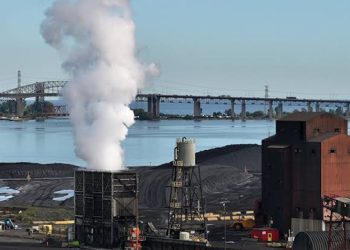
The Scunthorpe steelworks in north Lincolnshire – now controlled by the UK government – provided slabs made in its blast furnaces to Tata’s operations in south Wales in recent months, according to steel industry sources.
Indian-owned Tata was seeking ways to avoid threatened US tariffs on steel not sourced from the UK while its Welsh operations were reliant on buying slabs from elsewhere. However, the proposed rules were later dropped after the UK and US failed to reach an agreement.
The UK government took control of British Steelin April amid fears that its Chinese owner, Jingye Steel, was preparing to walk away and leave irreparable damage.
Since taking control, the government has directed British Steel to increase output and hire more workers. Jingye claimed the blast furnaces at Scunthorpe – the last in Britain able to make steel from iron ore – had been losing £700,000 a day.
Ramping up production was seen by some people as a way to improve profitability and ease the financial burden on the government. Earlier this month the government said it had injected £180m into British Steel to pay for raw materials, salaries and unpaid bills.

The decision by Tata, which owns the vast Port Talbot steelworks in south Wales, to buy metal from Scunthorpe is a relatively unusual move by rival companies to work together.
Tata – whose parent company is also dealing with the fallout of a cyber-attack at Jaguar Land Rover – closed its blast furnaces a year ago in order to build cleaner electric arc furnaces. While awaiting the completion of those furnaces, Tata had planned to import slabs from its other plants in the Netherlands and India to be rolled into sheets in its Welsh factories to be made into food tins and car bodies.
The purchase was attractive for Tata as the company, headquartered in Mumbai, sought ways around proposed US trade rules, according to steel industry sources. Trump had agreed to cut tariffs on UK steel to 0%, but with proposed rules that steel would have to be “melted and poured” in the UK to qualify.
Despite Trump’s initial assent to the 0% deal, US officials held up the implementation because of concerns that other countries would use the UK as a back door to get around tariffs.The UK government eventually concluded that it would not be able to reach a 0% deal, and the talks were abandoned this month.

UK steel exports to the US now attract 25% tariffs, significantly lower than the 50% imposed by Trump on every other importer. The 25% tariff does not include “melted and poured” restrictions.
Newly appointed Trade Secretary, Peter Kyle, is expected to visit the Scunthorpe plant in the coming weeks. However, there is still hope for an agreement with Jingye for its exit by the end of the year.
Jingye is expected to demand compensation of up to £1 billion—a figure that includes its total investment since purchasing British Steel in 2020. Steel industry sources believe receiving such an amount is unlikely.
A Tata spokesperson said: “We have collaborated with British Steel for years when needed to supplement our slab production. Since moving to the reroller model… this supply relationship has continued with British Steel, as well as other reputable steel companies in Europe and beyond.”
Lisa Coulson, Chief Commercial Officer at British Steel, said: “We have been working closely with the government in recent months to improve operational performance.”
A government spokesperson said: “We are cooperating with Jingye to determine the best long-term future for Scunthorpe while simultaneously negotiating with the US for the lowest possible tariff on steel and aluminum exports to strengthen our position as a reliable source of high-quality steel.”