In an exclusive interview with the Steel World Review, Engineer Mostafa Ahmadi-Pour, CEO of Jahan Foulad Gharb and Chairman of the Green Steel Committee, revealed the group’s goals for aligning steel production with international standards.
Is there anything from this conversation that you’d like me to keep in mind for next time?
We present the outcome of this conversation to you, our esteemed audience, below:
Green steel refers to steel produced using sustainable and environmentally friendly methods, which include replacing traditional fossil fuels like coal with renewable energy sources such as solar or wind power, and employing innovative techniques like hydrogen-based reduction and electric arc furnaces. These approaches significantly reduce carbon dioxide emissions and promote recycling and waste reduction in the production process. Green steel is essential for decarbonizing various industries such as construction and manufacturing, as well as supporting global efforts to combat climate change.
Considering climate change and the importance of the environment, what are the main goals and programs of this committee regarding the development of green steel standards?
Given climate change and environmental concerns, particularly global warming, which is a key challenge among environmentalists worldwide, one of the main culprits behind global warming and greenhouse gas emissions is the steel industry across the globe. One of the provisions of the Paris Agreement was the reduction of greenhouse gases such as carbon monoxide and carbon dioxide.
Accordingly, to achieve this reduction, specific responsibilities were assigned to companies in various sectors, including steel producers. Under this framework, the International Organization for Standardization (ISO) assigned duties to all countries, and nations around the world became committed to reducing greenhouse gas emissions.
For this purpose, a Steel Committee and a Green Steel Subcommittee were established in our country. In this context, an online election was held. All major steel companies in the country and the General Directorates of Standards participated, and after extensive expert discussions, I was ultimately elected as the Chairman of the Steel Committee. The General Directorate of Standards across the country held an online meeting to establish the structure of the subcommittee corresponding to ISO/TC 17/SC21, titled “Environment Related to Climate Change in the Iron and Steel Industry.” The meeting’s agenda included introducing the ISO organization and the SC21 subcommittee, holding elections, and determining the composition of the subcommittee’s officials, including the president, vice president, and secretary.
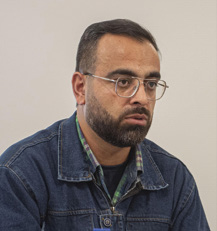
As the Chairman of the Green Steel Committee (TC17/SC21), what are your main roles and responsibilities in this committee?
The main responsibility of the Green Steel Committee is to organize gatherings focused on reducing environmental pollution in the steel sector and preventing the emission of pollutants, as well as developing international standards. In this regard, the first meeting was held in October of this year in Stockholm, Sweden, and I participated in this conference online on behalf of my colleagues and the Islamic Republic.
Regarding the impact of my selection as the Chairman of the committees, I must say that this may be the first time a private company is participating in such collaborations. Therefore, given the agility and flexibility of private companies, it will certainly lead to quicker results.
What factors led the Islamic Republic of Iran to decide to actively participate in the International Organization for Standardization (ISO), and what is the role of the Green Steel Committee in this participation?
The discussion of international relations and global trade is evolving in such a way that it is no longer just about exchanging goods for money or other goods. Instead, the world has shifted toward transferring or sharing the production process of the goods that different countries want to import into their own countries.
How can international standards help Iran’s steel industry, and what achievements have we made in this regard so far?
One of the decisions made by the ISO organization concerns the imposition of a carbon tax on companies that have high carbon emissions. This tax is intended to be levied on companies and products whose pollution levels exceed the established standards.
Certainly, such taxes and duties could pose challenges for exports to some extent. On the other hand, given that our country is one of the top ten steel producers in the world, we must comply with these international regulations. If we do not participate in the creation of these laws, we will undoubtedly face challenges during implementation. To prevent these challenges, it has been decided that we should actively participate in the establishment of these standard regulations.
In your opinion, what are the main challenges in the path of standardization and the green transformation of Iran’s steel industry, and how can they be overcome?
One of the challenges that many of our producers face is that many of our laws remain just on paper. In most cases, they don’t move towards implementation, and instead, there’s a tendency to focus on documentation and, in a sense, obtaining paper standards. This is truly unfortunate, and perhaps if all stakeholders in the steel industry, as a strategic sector, collaborate, we can solve this issue and move towards standardization.
What is your committee’s role in developing international standards in the field of environment and steel, and how do you utilize local knowledge and internal expertise?
It is planned that in the near future, the executive board members of the Green Steel Committee will hold the first meeting with the presence of all colleagues from the steel industry across the country. This meeting will be hosted in Kermanshah, in collaboration with the National Standard Organization, the Kermanshah Standard Directorate, and the Shokri Industrial Group.
It is hoped that the outcome of this meeting, which will be held in collaboration with the relevant organizations, namely the Environmental Organization and the National Standard Organization, will lead to bringing the country’s steel production closer to international standards.
What programs have you planned for raising awareness and promoting a culture of green standards and reducing environmental impacts in the steel industry?
Green steel might be referred to as a term, but globally, green steel means striving toward the production of steel with the goal of carbon elimination. It is a process that is defined in the extraction of iron ore and steel production, where the process results in the absence of carbon production. Major countries such as Canada, China, and Sweden are among those that have moved towards green steel both technically and scientifically.
For example, a company in Sweden has invested approximately 300 million dollars to establish and launch the first green steel production plant. In this process, a reaction occurs through water electrolysis, and green steel is produced by burning hydrogen.
Our distance from this innovative process is quite significant, and currently, the process being pursued by steel companies in our country is blue steel. Essentially, we must first focus on reducing carbon emissions. Developing countries are still far from high-tech industries, and it is anticipated that by 2050, green steel production will become widespread worldwide.
How do you envision the future of the steel industry in Iran, considering the expansion of green standards and a focus on environmental sustainability?
The future of the steel industry in Iran, considering the expansion of green standards and a focus on environmental sustainability, will undoubtedly see stricter and more robust export regulations. Countries that are successful in exporting steel are those that have advanced towards green steel and reduced carbon emissions, or at least minimized their carbon production. The steel industry in Iran must also move towards implementing green steel standards, especially since the issue of reducing dependence on oil exports is highly relevant in the country today. Steel exports are seen as a good and profitable alternative.
Given that one of the government’s policies is to minimize raw material exports and increase the export of finished products, with national determination and unity among officials and producers, we can move towards minimizing raw steel exports. We should focus more on producing final products within the steel value chain. This will undoubtedly lead to increased foreign exchange earnings and a reduction in unemployment in the country.
You’re very welcome! It was a pleasure speaking with you. If you need any further assistance, feel free to reach out.
Steel World Review